
When the Valley Speaks: How a Welsh Ashram Reveals Druidry’s Universal Roots
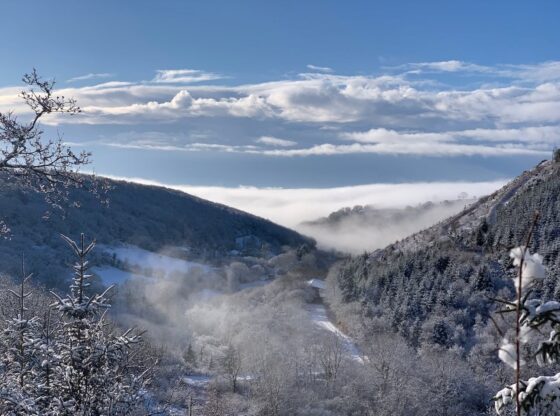
In the rolling hills of Carmarthenshire, where the road narrows to a single winding thread, a sacred experiment has been unfolding for over fifty years. Skanda Vale, home to the non-denominational Community of the Many Names of God, offers more than a meeting of South Asian temple traditions and British landscape—it reveals a deeper truth about how spiritual paths converge when rooted in place.
“I feel that I am not so much on a spiritual path, but in a spiritual landscape,” writes Salvatore Shyam Garfi, a visitor who found himself “thunderstruck” during his first temple puja. This insight speaks to the heart of Druidry’s ancient wisdom: that sacredness is not confined to doctrine but arises from the land itself. The 300 acres of mixed woodland, meadow, and bog at Skanda Vale are not merely a backdrop for worship—they are active participants in it.
The incense that filled the wooded valley during that June morning puja was not an import from India but an offering born of Welsh soil. For contemporary druids, Skanda Vale demonstrates that the Dharmic traditions of India and the indigenous spirituality of Britain share a core teaching: the divine is encountered through nature, not apart from it. The many shrines scattered throughout the landscape mirror the groves and sacred springs that druids have venerated for millennia.
What Skanda Vale offers is not syncretism but recognition—a reminder that when we honor the sacred in a particular place, we touch something universal. The winding road that leads there is itself a metaphor for the spiritual journey: uncertain, surprising, but always leading home to the earth beneath our feet.