
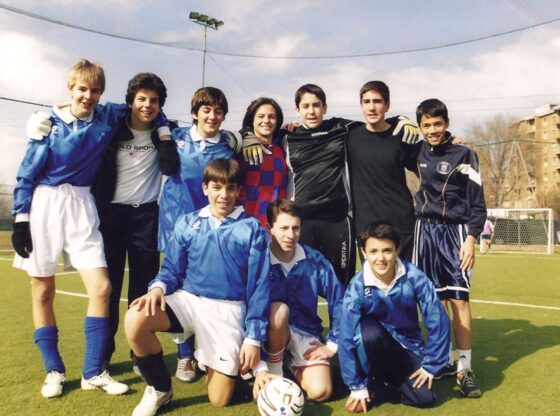

In the clamor of stadiums and the thunder of goals, few recognize a hidden sanctuary. Yet for a surprising number of canonized and soon-to-be-canonized figures, the soccer field was not a distraction from the spiritual life, but a crucible for it. From a young Argentine pope to a martyred Italian teenager, these saints did not merely tolerate the sport; they embraced it as a living parable of virtue, teamwork, and sacrifice.
The list is more extensive than casual fans might imagine. Saint John Paul II, an avid goalkeeper in his youth, once remarked that sports taught him discipline and the value of struggle. More recently, the young Blessed Carlo Acutis, known for his computer skills and Eucharistic devotion, was a passionate soccer player. His friends recall that he played with joy but without aggression, often saying that winning was less important than how you treated your teammates. Even Pope Francis, before his pontificate, was a devoted fan of San Lorenzo, a club rooted in the working-class barrios of Buenos Aires—a connection he has cited as formative in his understanding of community and belonging.
Why does this matter spiritually? In a world that often divides the sacred from the secular, these witnesses remind us that grace can operate in every arena of human life. The soccer pitch becomes a microcosm of the soul’s journey: it demands discipline, humility in defeat, magnanimity in victory, and a constant turning of the will toward a common good larger than the self. For the saints, the game was never an escape from God, but a path toward Him. As one spiritual writer observed, “The field is a place where you learn to fall and get back up—a perfect image of the Christian life.”
Deeper wisdom traditions have long understood that physical exertion, when offered with intention, can become a form of prayer. The Desert Fathers spoke of manual labor as a guard against acedia; the monastics of the Middle Ages saw the body as an instrument of worship. Soccer, in this light, is not a modern invention of mere entertainment, but a contemporary expression of an ancient truth: that the body, trained in virtue, can lead the soul toward its true goal. The discipline of passing the ball, of trusting a teammate, of enduring a loss without despair—these are not just athletic skills, but spiritual muscles.
The takeaway for the reader is both simple and profound: holiness is not found only in chapels and cloisters. It can be discovered in the mud of a Sunday match, in the laughter of a pickup game, or in the quiet act of cheering for a struggling teammate. The saints who played soccer did not separate their faith from their hobbies; they allowed their faith to transform their hobbies into acts of love. For those seeking wisdom today, the message is clear: let every kick, every goal, every handshake on the field be a prayer offered to the One who gave us the gift of movement, community, and joy.