
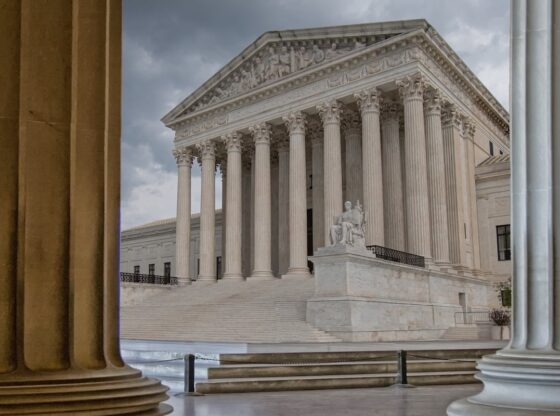

In an age of legislative paralysis and executive whim, the Supreme Court of the United States stands as an unlikely monument to something the ancient sages would recognize: the discipline of reasoned judgment. As the nation approaches its 250th anniversary, a curious spiritual truth emerges from the marble halls of justice. While Congress has completed its budget on schedule only four times in fifty years, and the presidency has become, in the words of columnist Peggy Noonan, governed by the “mood of one man,” the Court continues its work with a regularity that borders on the liturgical.
The spiritual significance of this contrast runs deeper than political commentary. Article III of the Constitution is the shortest of the three articles defining the branches of government—a brevity that mirrors the wisdom tradition’s understanding that true authority requires not elaborate structures but disciplined souls. The Court’s function is not to create law but to discern what the law already is, a process that echoes the contemplative tradition’s approach to divine wisdom: revelation is given, and the task of the wise is to interpret faithfully, not to invent according to convenience.
This is why the ancient spiritual traditions have always honored the role of the judge. In the Hebrew scriptures, the Book of Judges describes leaders raised up not by popular acclaim but by divine calling, tasked with discerning right order in times of chaos. In the Christian tradition, the virtue of prudence—the ability to judge rightly in concrete situations—is considered the charioteer of all other virtues. The Court’s insistence on reason and serious debate, rather than partisan calculation or personal mood, embodies this classical understanding that right judgment requires detachment from self-interest and attachment to truth.
The takeaway for the spiritual seeker is profound. In a culture that increasingly celebrates emotional authenticity over reasoned discernment, the Court reminds us that wisdom is not a feeling but a discipline. The justices do not consult their moods; they consult precedent, text, and principle. For the soul seeking to navigate the chaos of modern life, the same discipline applies. Before making any significant decision, the wise person asks: What does the tradition teach? What are the principles involved? What would a dispassionate observer conclude? The Supreme Court’s quiet dignity in an age of dysfunction is not merely a political phenomenon—it is a living parable about the spiritual practice of judgment, reminding us that the path to wisdom is paved not with feelings but with faithful attention to what is true, good, and lasting.