
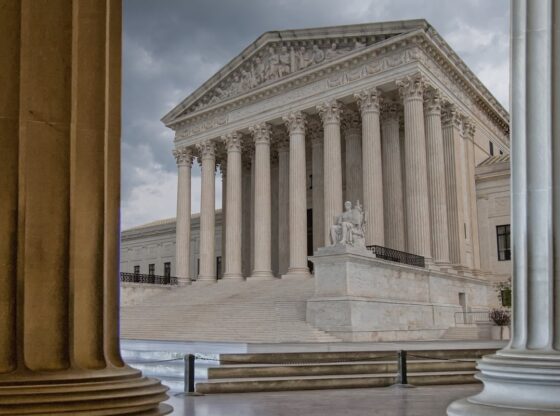

In an age when governance often feels like a chaotic tempest of personal whim and institutional paralysis, one institution stands as a quiet testament to the possibility of reasoned deliberation. The Supreme Court of the United States, established in the briefest of the Constitution’s three articles, has become—almost by default—the only branch of government that consistently performs its constitutional duty. This is not merely a political observation; it is a spiritual lesson about the nature of order, wisdom, and the human capacity for measured judgment.
The contrast could not be starker. Congress, as one observer gently noted, seems to have forgotten its primary power—the power of the purse—having completed its budget on schedule only four times in fifty years. The Senate routinely confirms manifestly incompetent officials, eviscerating its constitutional role of advice and consent. And the presidency, as commentator Peggy Noonan observed, has become captive to “the mood of one man,” where personal temperament “mows down all” and reduces serious officials to “anxious ferrets sparring with Sunday news show anchors.” Against this backdrop, the Supreme Court remains a sanctuary of reason, governed not by partisan calculation or emotional volatility, but by serious debate and constitutional principle.
From a spiritual perspective, this reveals something profound about the human condition. Every wisdom tradition teaches that true authority is not merely power, but the disciplined application of wisdom. The Tao Te Ching speaks of the sage who governs by being still at the center, allowing the natural order to unfold. The Buddhist tradition emphasizes right mindfulness and right intention as foundations for any meaningful action. The Supreme Court, in its ideal form, embodies this ancient ideal: a body that does not react to the passions of the moment, but sits in patient reflection, weighing precedent, principle, and the long arc of justice. It is a living reminder that the health of any society depends not on the charisma of its leaders or the efficiency of its administrators, but on the integrity of its judges—those who can discern what is true and right beyond the clamor of the crowd.
For the spiritual seeker, the lesson is both humbling and inspiring. The Supreme Court’s relative success is not a matter of perfect individuals—justices are human, fallible, and shaped by their own biases. Rather, it is a testament to the power of structure, process, and a commitment to something greater than oneself. The Court’s authority rests not on force, but on the willingness of the nation to accept its reasoned judgments as binding. This is a form of faith—faith that reason can prevail over impulse, that principle can guide power, and that a community can submit to a shared standard of justice. As the nation approaches its 250th birthday, the question is not merely whether the Court will continue to function, but whether the rest of us can recover the spiritual discipline of listening to wisdom, setting aside our moods, and honoring the sacred duty of judgment—in our institutions and in our own lives.