

When the Altar Stands Beside the Assembly: A Patriarch’s Case for Moral Governance
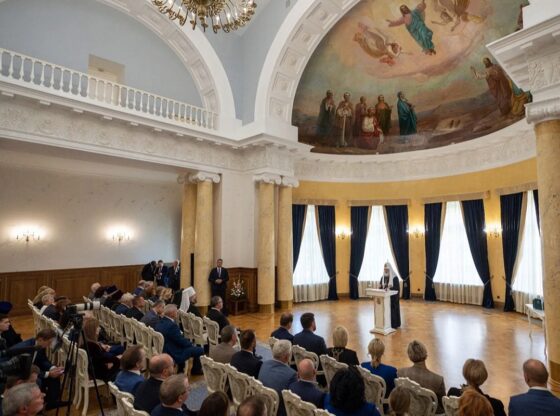
At Moscow’s City Duma, within a chapel marking 150 years since its founding, Patriarch Kirill of Moscow made an argument that reaches beyond any single nation’s politics: that a state’s development cannot be separated from moral principles. The setting itself carried the message — a church, the Church of St. Alexander Nevsky, housed within the complex where lawmakers now deliberate.
The Patriarch led a moleben, a service of intercession, before addressing those gathered, including Duma Chairman Alexei Shaposhnikov and Archpriest Alexander Marchenkov, who presented him with a painting of Novokuznetskaya Street.
For seekers of wisdom, the occasion raises a question older than any parliament: can law flourish without conscience? The Patriarch’s words suggest that institutions, however secular, draw their legitimacy from something deeper than procedure — a moral foundation that no vote can manufacture. Whether one reads this as a call to piety or a plea for integrity, it echoes a universal spiritual claim: governance, like the soul, is measured by what it serves.