
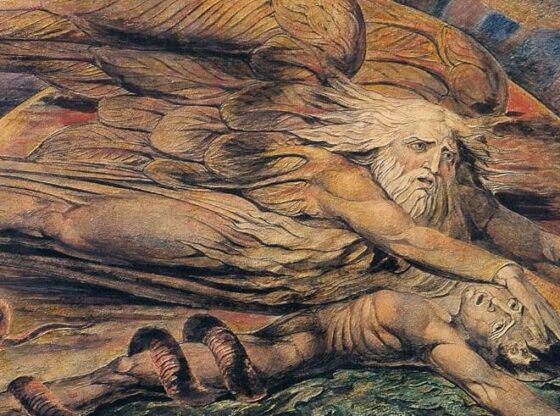

In 1872, a Scottish adventurer named William Winwood Reade published a book that would captivate some of the most brilliant minds of his era—Winston Churchill, George Orwell, and A. A. Milne among them. The Martyrdom of Man was hailed as a “substitute Bible” for secularists, offering a vision of humanity painfully escaping its physical prison through the relentless march of science. Reade’s rapturous prose imagined future “blessed ones,” “pure and radiant beings” who would look back at their ancestors as pathetic meatsacks, “grubbing in the ground for our daily bread, eating flesh and blood, dwelling in vile bodies.” Today, this nearly forgotten text reveals something unsettling about the spiritual DNA of modern transhumanism: it is a heresy born from Christian hope, twisted into a doctrine of human self-salvation.
What makes Reade’s vision spiritually significant is not its novelty but its perversion. Christians instinctively recognize the shape of the story—a journey from bondage to liberation, from mortal flesh to transformed existence. The Apostle Paul himself wrote of creation “groaning” for liberation and of believers being “transformed” into the likeness of Christ. But Reade and his intellectual descendants have stripped this narrative of its divine Author. The cross becomes merely the pain of evolutionary progress. The resurrection becomes a technological upgrade. As the contemporary philosopher Carl Trueman has insisted, our bodies are not raw material to shape according to our whims—we are creatures, bounded and finite, and any attempt to transcend that limitedness is “hostile to humanity itself.”
The deeper wisdom tradition here is the ancient Christian understanding that the desire for transformation is not wrong—it is misplaced. When Reade writes of humanity wriggling free of the chrysalis to spread its wings, he echoes a genuine spiritual longing for theosis, the Eastern Christian concept of becoming partakers of the divine nature. But the Church Fathers knew that this transformation could only come through humility, not technological domination; through grace, not genetic engineering; through surrender to God, not escape from creatureliness. The transhumanist dream of becoming “pure and radiant beings” through science is, in truth, the oldest temptation in the garden: “You will be like gods.”
For the seeker of wisdom, the lesson is both sobering and liberating. The spiritual impulse behind transhumanism—the refusal to accept death, limitation, and suffering as final—is a distorted echo of the Gospel’s promise of resurrection. But the Christian path does not promise escape from the body but its redemption; not liberation from creatureliness but its fulfillment in communion with the Creator. As Reade’s forgotten masterpiece fades into obscurity, it leaves behind a warning: every attempt to save ourselves through our own power ends in the very prison we sought to flee. True transformation begins not with the abolition of man, but with the confession that we are not God—and that this is, finally, good news.