
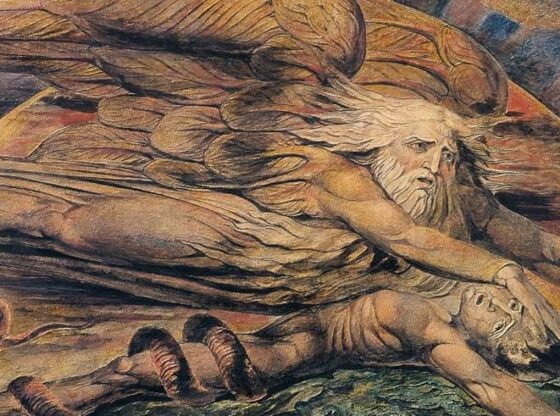

In the forgotten pages of William Winwood Reade’s 1872 volume, The Martyrdom of Man, a peculiar vision of human destiny once captivated the secular imagination. Winston Churchill, George Orwell, and even Sherlock Holmes counted themselves among its admirers. Reade imagined a future where science would transform our “contemptible” bodies into something glorious—”pure and radiant beings” who would look back at their ancestors as “poor savages, grubbing in the ground for our daily bread.” This was theistic transhumanism before the term existed, a strange hybrid of Christian hope and scientific ambition that the First Things article now brings to light. But what does this forgotten dream reveal about the spiritual hunger that technology cannot satisfy?
The deeper issue here is not merely about futuristic body modifications or artificial intelligence. It is about the ancient temptation to escape our creaturely limitations—a temptation that the wisdom traditions have always recognized as spiritual pride. Reade’s vision, however dressed in scientific language, echoes the Gnostic heresy that the material world is a prison to be escaped rather than a gift to be received. The Christian tradition, by contrast, has always insisted that our bodies are not raw material for our whims, as theologian Carl Trueman reminds us. They are cunningly designed, bounded, and finite—precisely the conditions that make love, sacrifice, and genuine human relationship possible.
What the secular transhumanist misses is the paradox at the heart of the spiritual life: that true transcendence comes not through escaping our limitations but through embracing them. The mystics of every tradition have taught that the path to union with the Divine runs through the body, not away from it. Saint Francis received the stigmata in his flesh. The Desert Fathers and Mothers wrestled with their physical appetites not to destroy the body but to transform it into a vessel of grace. Even Reade’s title, The Martyrdom of Man, inadvertently points to this truth—the cross is not a technology to be overcome but a mystery to be entered. The Christian hope is not that we will escape our humanity but that it will be raised, transformed, and glorified while remaining fully human.
For the reader seeking wisdom, the lesson is both sobering and liberating. The transhumanist dream is ultimately a form of spiritual bypassing—an attempt to achieve resurrection without the cross, glory without sacrifice, and transcendence without trust in God. It promises liberation but delivers a deeper enslavement to the very pride it claims to overcome. The authentic spiritual path, whether Christian, Buddhist, or otherwise, calls us to something far more demanding: to accept our finitude as the very place where the infinite can meet us. Our bodies are not prisons to escape but temples to be hallowed, not raw material to be reshaped but gifts to be offered back to the One who gave them. In accepting our limits, we discover a freedom that no technological fix can provide—the freedom to be fully human in the presence of the Divine.