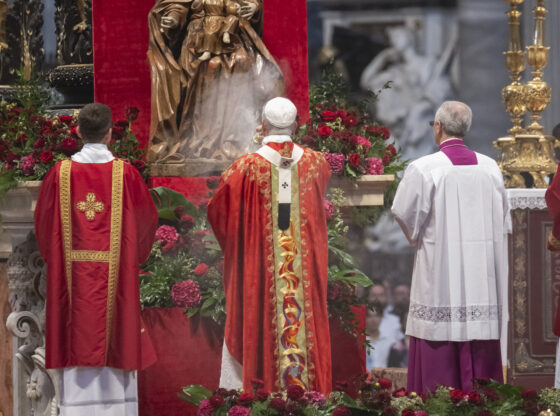

In a world fractured by division, Pope Leo XIV delivered a profound meditation on unity during the Feast of Saints Peter and Paul, addressing the College of Cardinals after two days of intensive meetings. Rather than focusing on administrative matters, the Pontiff directed attention to the spiritual foundation of the Church’s mission: the paradoxical partnership between two very different apostles. Peter, the impulsive fisherman who denied Christ, and Paul, the zealous persecutor turned missionary, were presented not as perfect icons but as living testimonies to the transformative power of divine love.
The spiritual significance of this moment cannot be overstated. In an era where even religious communities risk becoming echo chambers of like-minded individuals, the Pope’s homily challenged the assembled cardinals to embrace a unity that does not erase differences but sanctifies them. “Peter and Paul did not agree on everything,” the Holy Father reportedly observed, “yet they were bound by something greater than human consensus—the Blood of Christ and the confession of His Lordship.” This is not the unity of uniformity, but the unity of the Trinity itself: distinct persons in perfect communion.
Deeper wisdom traditions affirm that true unity requires spiritual maturity. The Desert Fathers taught that a community united in love becomes a furnace that burns away ego and pride. Similarly, the Catechism reminds us that the Church is a “sacrament of unity” precisely because it gathers people from every nation, tongue, and temperament. Pope Leo XIV’s message echoes this ancient understanding: unity is not achieved by avoiding conflict but by submitting personal agendas to the greater work of the Holy Spirit. The apostles’ martyrdom in Rome—Peter crucified upside down, Paul beheaded by the sword—sealed their witness with blood, proving that unity worth having is worth dying for.
For the modern seeker, the takeaway is both challenging and liberating. We are often tempted to seek community only with those who think, vote, or pray as we do. Yet the feast of Peter and Paul invites us into a more demanding path: to love those with whom we profoundly disagree, not by compromising truth, but by recognizing that truth itself is a Person, not a proposition. As the Pope’s homily suggests, the apostles of unity are not those who paper over differences, but those who allow their own hearts to be broken open by the other. In a time of polarization, this is not merely a nice sentiment—it is the only way forward that leads to life.