
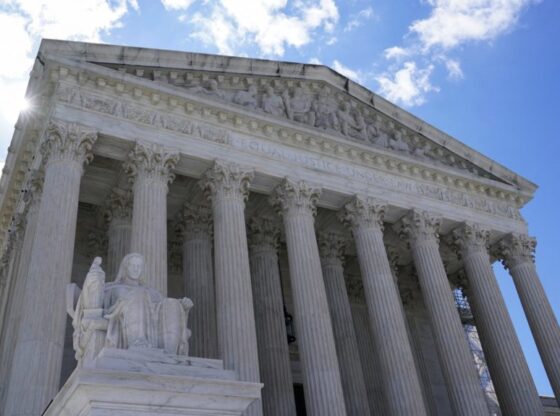

The United States Supreme Court’s recent decision to strike down an executive order limiting birthright citizenship has sent ripples far beyond the political sphere. At its core, this ruling is not merely a legal victory or a policy defeat—it is a profound affirmation of a spiritual principle that has echoed through wisdom traditions for millennia: the inherent dignity of every person, simply by virtue of being born. On June 30, the Court affirmed that the 14th Amendment’s promise of citizenship for all born on American soil is a “right to have rights,” as Chief Justice John Roberts wrote in the majority opinion. For spiritual seekers, this moment invites a deeper reflection on what it means to belong—not to a nation, but to the human family itself.
The case, Trump v. Barbara, centered on an executive order that sought to deny automatic citizenship to children born in the U.S. to parents without permanent legal status or temporary visa holders. The Court’s ruling preserved a principle that has been settled law for over a century: that the soil of a nation carries a sacred promise of inclusion. This echoes a truth found in many spiritual traditions—that birth itself is an act of grace, not a transaction of merit. In the Christian tradition, the Apostle Paul wrote that in God’s kingdom, there is “neither Jew nor Gentile, neither slave nor free” (Galatians 3:28), pointing to a belonging that transcends human-made boundaries. Similarly, the Buddhist concept of metta—loving-kindness without discrimination—teaches that all beings deserve compassion and recognition, not because of what they can offer, but because they exist.
Chief Justice Roberts’ citation of Senator Lyman Trumbull, a framer of the Civil Rights Act of 1866, reminds us that the 14th Amendment was born from a spiritual and moral reckoning with the legacy of slavery. Trumbull spoke of extending the promise of citizenship to “every free-born person in this land.” This language carries echoes of the ancient Hebrew concept of ger—the stranger or sojourner—who, in the Torah, is to be loved and protected precisely because the Israelites themselves were once strangers in Egypt (Leviticus 19:34). The Court’s ruling, therefore, is a modern reaffirmation that no person is a stranger on the soil where they are born. It challenges the notion that worth can be measured by legal status, ancestry, or economic utility, and instead insists on a vision of humanity where every child is a sacred being with an inherent right to belong.
For the reader seeking spiritual wisdom, this ruling offers a powerful takeaway: the boundaries we draw—whether national, religious, or social—are ultimately illusions that veil the deeper truth of our interconnectedness. The executive order, in seeking to exclude certain children from the promise of citizenship, reflected a worldview that divides the world into “us” and “them.” But the Court’s decision, grounded in the 14th Amendment, reminds us that the highest law is love, and that every birth is a divine act that bestows dignity without condition. In your own life, consider where you might be drawing invisible lines of exclusion—judging others by their origin, status, or background. The ruling calls us to practice a radical hospitality of the heart, recognizing that every person you meet is, in the words of the mystic Rumi, “a mirror of the Divine.” Citizenship, in the end, is not just a legal status; it is a spiritual truth: we all belong to one another, and to the Source of all life.