
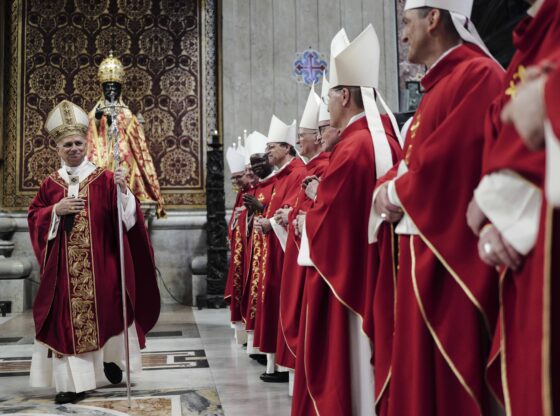

When Pope Leo XIV places the pallium on four American archbishops this June 29, he is not merely conferring a vestment. He is weaving a visible thread of unity that stretches back to the Apostle Peter, whose bones rest beneath the very altar where the ceremony will take place. The white wool, taken from lambs blessed on the feast of St. Agnes, carries a deeper meaning for those seeking wisdom: it symbolizes the Good Shepherd who carries the lost sheep upon his shoulders.
Archbishop Ronald Hicks of New York, along with Archbishop James Checchio of New Orleans, Archbishop James Golka of Denver, and Archbishop Mark Rivituso of Mobile, will receive this ancient sign of metropolitan authority. Yet the pallium is not a crown of power but a yoke of service. In a time when the Church in America faces profound challenges—including the ongoing work of healing and compensation for abuse survivors, as Archbishop Hicks has acknowledged—this symbol reminds the faithful that true authority is measured not by control, but by the willingness to bear burdens.
“Although much work remains to be done before a settlement can be finalized and consummated, I am cautiously optimistic about the path we are on,” Hicks said in a May 1 statement, reflecting the pastoral patience that the pallium demands. The ceremony on the solemnity of Sts. Peter and Paul invites all believers to consider how spiritual leadership must always point beyond itself, toward the One who laid down his life for the flock.