
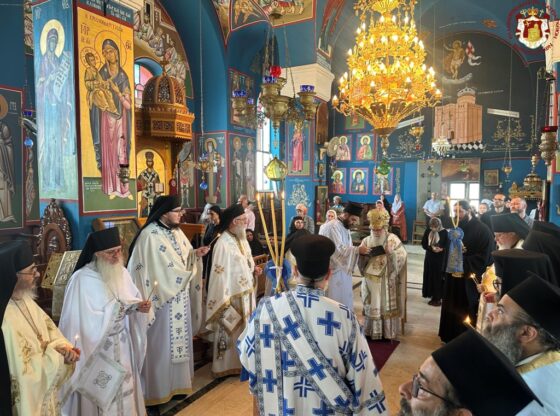

On Saturday, 27 June 2026, the Patriarchate of Jerusalem gathered at the Monastery of the Prophet Elisha in Jericho—a site that also shelters the sycamore tree of Zacchaeus—to honor a man who was a farmer before he was a prophet. The spiritual lesson of this feast is not merely about miracles, but about the radical reordering of a life mid-plough.
Around 909 BC, the Prophet Elijah found Elisha working the land with twelve yoke of oxen. The command from God was not a whisper in the temple, but a call in the furrow. Elisha’s response was total: he slaughtered the oxen, fed the people, left his parents, and followed. This is the pattern of authentic spiritual transformation—not gradual refinement, but a decisive burning of the old life. As Sirach 48:12–14 testifies, “Whilst he lived, he was not moved with the presence of any prince… and after his death his body prophesied.”
Patriarch Theophilos of Jerusalem presided over the Divine Liturgy, joined by Archbishop Aristarchos of Constantina and visiting clergy. The hymns rose in Greek and Arabic, a reminder that the mantle of Elisha—the double portion of grace received from Elijah’s fiery chariot—is not a relic of the past. It is an invitation to every soul still gripping the plough, to consider what oxen must be sacrificed before the Jordan can be crossed.