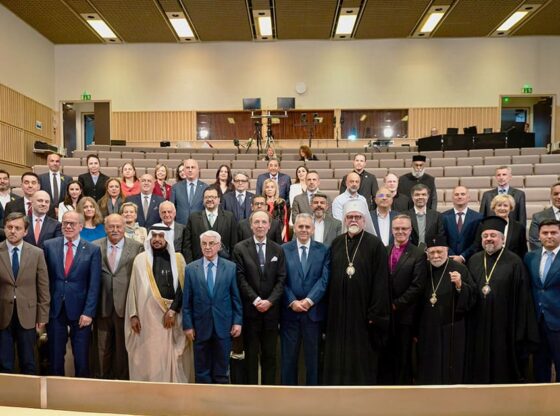

In the quiet halls of Helsinki’s SOFIA Cultural Center, a gathering of 15 parliaments and spiritual leaders convened not to debate power, but to confront the fragility of faith itself. The 33rd General Assembly of the Interparliamentary Assembly on Orthodoxy, held from 17-21 June 2026, placed a singular, urgent question at its core: what becomes of Christian communities when the world around them crumbles?
This was not a theoretical exercise. The Assembly’s theme—”Minority Christian Populations in Times of Crisis: Relations between Society, State and Church”—drew a stark map of contemporary martyrdom. From the ancient patriarchates of Alexandria and Antioch to the embattled faithful in the Kurdistan Region, represented by Minister Ano Jawhar Abdoka, the proceedings revealed that the true test of Orthodoxy is not in its cathedrals, but in its resilience when it has nothing left but its witness.
A message from Ecumenical Patriarch Bartholomew, delivered by Metropolitan Elias of Helsinki, anchored the gathering in a sobering truth: the Church’s identity is forged not in comfort, but in the crucible of displacement and persecution. The presence of observers from Sweden and Ukraine, alongside leaders from COMECE and the Lutheran Church of Finland, signaled that this crisis is ecumenical—a shared burden of conscience. The Assembly did not offer easy solutions, but it did something more profound: it reminded the world that a minority Church is often the most faithful mirror of the Gospel.