
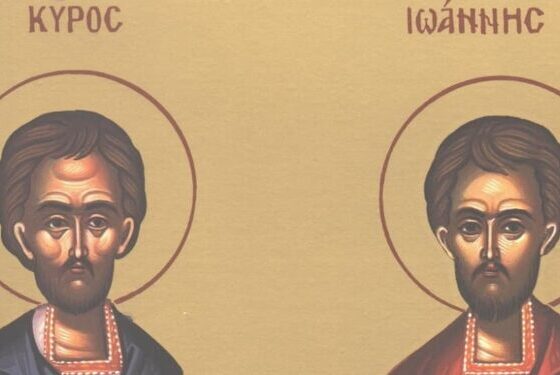

The translation of sacred relics is never merely a logistical event—it is a testament to the spiritual economy of God’s grace. On June 28, the Church commemorates the movement of the holy remains of Saints Cyrus and John from Konopa to Manuphin in 412, a journey that transformed a pagan stronghold into a fountain of miracles.
One century after their martyrdom in 311, Patriarch Cyril of Alexandria faced a spiritual crisis: demons had entrenched themselves in the temple of Manuphin. Human prayer alone could not dislodge them. An angel revealed that only the relics of these two unmercenary physicians could cleanse the sanctuary. Cyril obeyed, building a church in their honor, and the unclean spirits fled immediately.
Saints Cyrus and John embody a radical Christian medicine. Cyrus, a wealthy Alexandrian doctor, healed without payment—not as a technique, but as a testimony. He prescribed prayer and Scripture before herbs, and after curing the body, he echoed Christ’s command: “Go and sin no more.” John, a soldier from Edessa, abandoned his sword to become Cyrus’s disciple in both faith and healing.
Their martyrdom came when they visited the Christian woman Athanasia and her three daughters in prison. For this act of spiritual solidarity, they were beheaded on January 31. Their relics now teach us that true healing requires no gold—only the courage to stand with the persecuted and the humility to let God’s power work through bone and dust.