
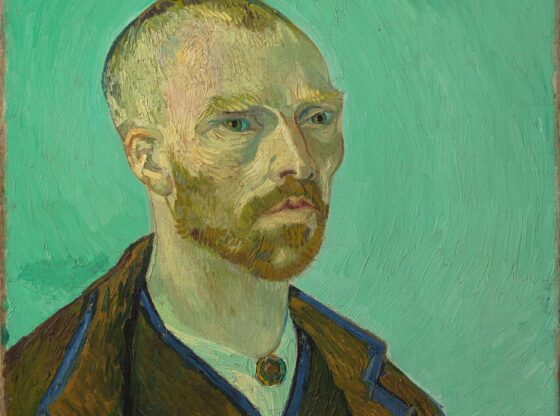

The Van Gogh Effect: What Awe Does to the Awakened Mind
Standing before Van Gogh’s self-portrait at the Harvard Art Museum, the Buddhist teacher Nagapriya found himself arrested by a presence that “lights up the entire room.” The painting, originally a gift to Paul Gauguin who later sold it for 300 francs, radiates what Nagapriya calls “a fierce human singularity” — an icon opening onto a spiritual dimension.
This encounter became a meditation on reverence itself. “Reverence is a vital human response,” Nagapriya writes, “and it enables us to attune to what is truly excellent, to that which uplifts us, and draws us toward what is transcendental.”
Yet reverence, he observes, is “so often stifled, mistrusted, and even derided” — dismissed as naive or a glorification of submission. Against this, Nagapriya argues that reverence is not weakness but perception refined: it “ennobles our modest daily routine, sacralizes the moment, and organizes our world according to a scale of values.”
Without it, he warns, “we are merely reproductive organisms, genetic transmitters, survival machines.” For Nagapriya, honoring this “primordial capacity” is integral to the Buddhist life — and to any genuine connection with the transcendent.