
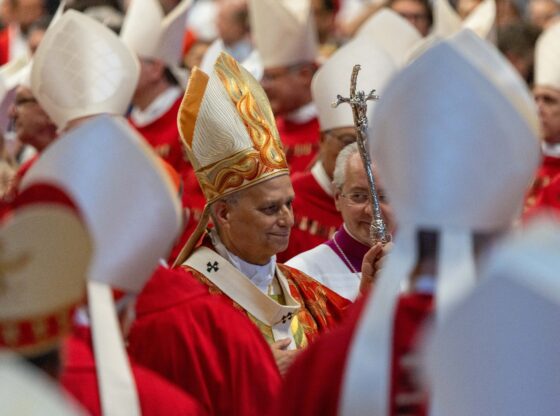

In a solemn ceremony at St. Peter’s Basilica on June 29, Pope Leo XIV marked the feast of Sts. Peter and Paul by bestowing the pallium upon 35 metropolitan archbishops. Yet beneath the ritual of wool and vestments, the pontiff’s homily carried a deeper spiritual current—one that reaches far beyond the walls of Vatican City. Drawing from the lives of the Church’s two patron saints, Leo offered a meditation not merely on institutional unity, but on the inner transformation required for any genuine reconciliation among believers.
“Peter’s example is an invitation to every Christian to become a builder of unity,” the pope declared, “placing God at the center of one’s life and drawing close to one’s brothers and sisters, attentive to their circumstances and needs.” This call echoes a perennial truth found across wisdom traditions: that union with the Divine precedes and enables union with one another. In the mystical language of the desert fathers, the heart must first become a single flame before it can warm another. Leo’s words suggest that Christian unity is not a diplomatic achievement but a fruit of interior stillness—a centering on God that naturally radiates outward in charity.
The pope then turned to the conversion of St. Paul, quoting St. Augustine to emphasize that God took a “persecutor of the Church and made him a messenger of peace.” Paul’s transformation from violence to love serves as a living parable for our fractured age. The Apostle to the Gentiles, Leo explained, “allowed himself to be transformed by the power of God’s word, which rescued him from the way of violence and led him onto the path of love.” This is not a mere historical footnote; it is a blueprint for the soul. In the Buddhist tradition, the metaphor of the lotus rising from muddy water mirrors Paul’s journey—the most unlikely vessel can become a channel for grace if one surrenders to the refiner’s fire.
The ceremony also included a delegation from the Ecumenical Patriarchate of Constantinople, a reminder that the path to unity is walked in the company of others. The pallium itself—a band of lamb’s wool adorned with crosses—symbolizes the shepherd’s burden and the sacrificial love that binds all Christians. Yet Leo’s message transcends denominational lines. He invites every seeker, regardless of tradition, to consider that unity begins not in councils or agreements, but in the quiet recesses of the human heart. As the Sufi poet Rumi wrote, “The lamps are different, but the Light is the same.” The pope’s homily echoes this truth: when we place the Divine at the center, the peripheries of division begin to dissolve.
For the reader seeking spiritual wisdom, the takeaway is both simple and profound: the work of unity is first an inner work. Before we can build bridges between churches, we must allow the Divine to heal the fractures within our own souls. Peter’s invitation to draw close to others flows from a life centered on God. Paul’s transformation from persecutor to peacemaker shows that no past is beyond redemption. Whether you are a Christian, a seeker of another path, or simply a soul yearning for harmony in a divided world, the lesson of these two saints is timeless: unity is not something we create, but something we become—by letting the fire of love consume our walls and reveal the one Light shining through all.