
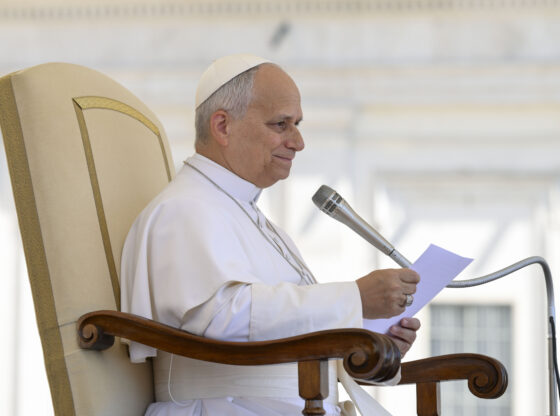

As the United States prepares to mark its 250th anniversary, a different kind of pilgrimage is drawing to a close—not a political celebration, but a six-week journey of faith that has carried the Blessed Sacrament across the eastern seaboard. On July 5, 2026, Pope Leo XIV will address thousands of pilgrims gathered in Philadelphia for the closing Mass of the National Eucharistic Pilgrimage, offering a message that organizers describe as a reflection on Catholicism’s legacy in America and a call to seek renewed unity through Christ in the Eucharist. The event, which coincides with Independence Day weekend, will also include visits to the tombs of St. Katharine Drexel and St. John Neumann—two saints whose lives embody the intersection of faith and national identity.
For the spiritual seeker, this convergence of sacred and secular history invites deeper reflection. The pilgrimage itself is not merely a logistical feat but a living parable: a journey of the Eucharist through a land that has often struggled to reconcile its founding ideals of liberty with the call to divine communion. As Philadelphia Archbishop Nelson Pérez noted, “Christ in the Eucharist is the source of our unity and the heart of the Church’s mission.” In a nation increasingly fractured by division, the act of carrying the Blessed Sacrament from city to city becomes a prophetic witness—a reminder that true unity is not political but sacramental, rooted in the self-giving love of Christ.
Wisdom traditions across the ages have long recognized that a nation’s soul is shaped by its relationship with the sacred. The ancient mystics taught that the Eucharist is a “medicine of immortality,” a foretaste of the heavenly banquet that transcends all earthly borders. In the context of America’s 250th anniversary, the pilgrimage echoes the biblical theme of the Exodus—a people journeying through the wilderness toward a promised land that is not merely geographical but spiritual. The choice of Philadelphia, the “City of Brotherly Love,” is no accident; it recalls the early Christian ideal of koinonia, or fellowship, which the Eucharist both signifies and makes real. St. Katharine Drexel, who used her wealth to serve Native and African American communities, and St. John Neumann, a humble bishop who shepherded immigrants, stand as witnesses that holiness is lived in service to the common good.
For readers seeking wisdom, the takeaway is this: the Eucharist is not a private devotion but a public invitation to transformation. As Jason Shanks, president of the National Eucharistic Congress, stated, “The National Eucharistic Pilgrimage is a public invitation to encounter Jesus Christ in the Eucharist and to carry his presence into the life of our nation.” In a time when many feel adrift, the pilgrimage offers a map—not of highways, but of the heart. To receive Pope Leo XIV’s message is to hear a call that transcends any single anniversary: the call to become, ourselves, bearers of Christ’s presence in a world hungry for peace, unity, and hope. The journey does not end in Philadelphia; it begins anew in every soul that dares to follow the Bread of Life into the streets of a broken but beloved land.