
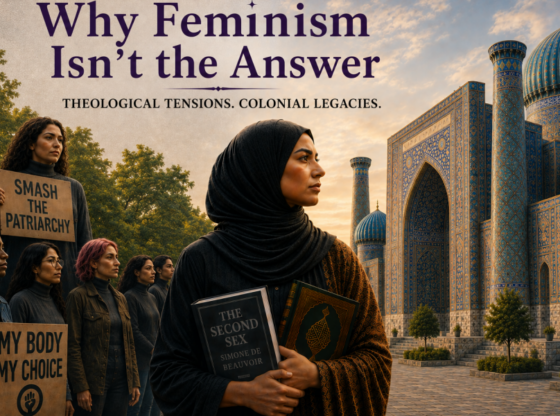

The Uncomfortable Mirror: What Muslim Women’s Discontent Reveals About Our Collective Soul
In community circles, a familiar anxiety surfaces when the topic of feminism arises. Yet the deeper spiritual question is not about ideology, but about justice—or the lack thereof. The Quran’s command to stand firmly for justice (Q5:8) applies to our internal communal dynamics as much as to external political struggles. When Muslim women seek frameworks to name their experiences of dhulm (oppression), we must ask whether we have failed to embody the prophetic model of equity in our own homes and institutions.
This reckoning is not a modern innovation but a return to the jahiliyyah—the age of ignorance—that the Prophet ﷺ came to dismantle. The pre-Islamic practice of burying daughters alive finds its contemporary echo in silencing women’s voices, dismissing their grievances, or treating their concerns as threats to communal honor. True faith demands we examine whether our cultural practices have been mistaken for divine decree, conflating tradition with revelation.
The path forward requires courage: the courage to listen, to repent, and to realign our communities with the justice that is a hallmark of Islamic spirituality. This is not about adopting external frameworks wholesale, but about recognizing that when our sisters cry out against injustice, they are calling us back to our own sacred principles.