
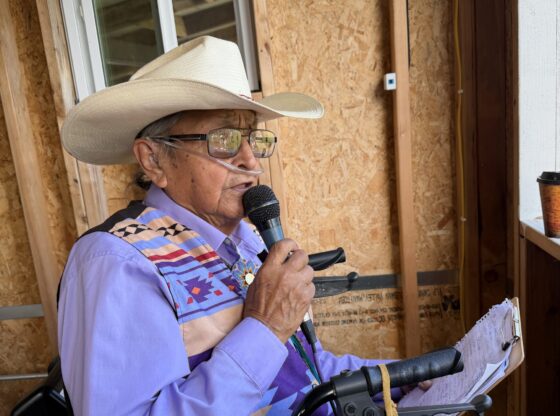

The Sacred Voice of the Arena: What a Half-Century of Powwow Announcing Teaches Us About Service
In the center of the dance arena, there is a voice that binds the circle together. It is not the drum, nor the dancers’ bells, but the eyapaha—the announcer—whose words carry the weight of tradition. Everette “Butch” Felix, Sicangu Lakota, has been this voice for fifty years, and his role transcends mere event management.
For Felix, the announcer’s stand is a place of spiritual duty. “I have a little ritual before I announce anywhere, I say a prayer of gratitude to those that helped me, and to look towards me or stand beside me,” he shared at the 64th annual Wakpa Ipaksan Wacipi in Flandreau, South Dakota. “So I can do things in an honorable, respectful manner.”
This practice reveals a profound truth: the eyapaha is not a performer but a conduit. As Oglala journalist Chuck Trimble noted in 2011, the village crier “heralded the stories of courage around the camp when warriors returned from battle, and were important people themselves.” Felix, who never sought the role—”it just kind of morphed itself onto me”—embodies a calling rooted in humility and community service.
In an age of noise, the eyapaha reminds us that true leadership is about holding space for others, offering humor and guidance while remaining grounded in gratitude.