
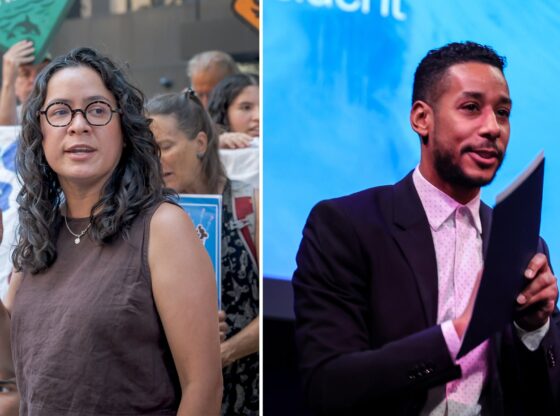

The political landscape of the United States is shifting, and for those who watch the world through a spiritual lens, the recent primary victories of staunch Israel critics are not merely electoral data points—they are a profound reflection of a collective conscience awakening. In New York City, the endorsement of Mayor Zohran Mamdani helped unseat two pro-Israel incumbents, while in Colorado, Melat Kiros’ decisive win in Denver’s Democratic primary sent a clear signal that a new wave of voters is demanding a reckoning with U.S. foreign policy. These are not just political wins; they are the public expression of a deep moral unease that has been building for years.
At the heart of this movement is a fundamental spiritual question: What does it mean to stand with the oppressed? The candidates who have risen—figures like Kai Newkirk in Arizona’s 4th District, who calls for a complete arms embargo on Israel—are tapping into a growing conviction among Democratic voters that the U.S. government’s support for Israel has become unbalanced, even unjust. For many, this is not about anti-Zionism alone but about a broader spiritual commitment to truth-telling. As the Jewish tradition teaches in Pirkei Avot, “The world stands on three things: on justice, on truth, and on peace.” When a nation feels its leaders have tilted too far toward power at the expense of the powerless, the soul of that nation cries out for correction.
Yet this moment also carries a shadow. Some Jewish groups and critics have expressed concern that the rhetoric in this election cycle has at times veered into antisemitism. The spiritual danger here is real: when political passion replaces discernment, the line between criticizing a government and demonizing a people can blur. The great wisdom traditions warn against this. In the Bhagavad Gita, Lord Krishna teaches that action must be rooted in dharma—righteous duty—not in hatred or ego. Similarly, the Buddha’s Eightfold Path emphasizes “right speech,” which avoids divisive and harmful words. A spiritually mature movement must hold two truths at once: that Israel’s policies can be justly criticized, and that Jewish people everywhere must not be scapegoated for the actions of its government.
The upcoming races—including Arizona’s July 21 primary and contests in Michigan, Pennsylvania, and beyond—will test whether this movement can sustain its moral clarity. The Democratic Socialists of America have built a vast volunteer infrastructure, but the deeper question is whether these candidates can channel voter frustration into a vision that heals rather than fractures. The takeaway for the spiritual seeker is this: every political shift is a mirror of our inner state. When we see a nation divided over justice for Palestine and Israel, we are being called to examine our own hearts. Are we acting from love or from anger? Are we seeking truth or merely victory? The ancient prophets—from Isaiah to Amos—reminded us that God does not desire empty rituals but a society where “justice rolls down like waters.” In this election season, the waters are rising, and the question for each of us is whether we will swim with integrity or drown in division.