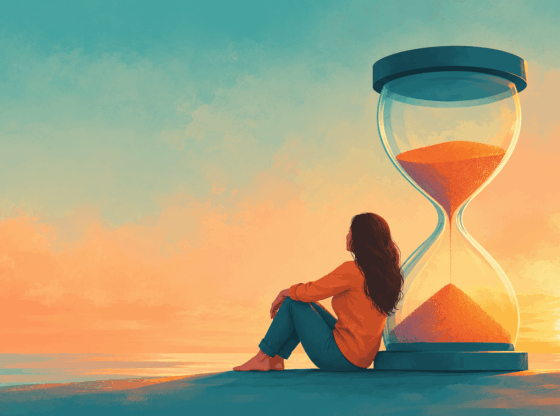

In the quiet arithmetic of human existence, there is a calculation most of us refuse to perform: the counting of our remaining years. Yet across spiritual traditions, from the Desert Fathers to Zen masters, the conscious contemplation of death has long been regarded not as morbid fixation, but as the sharpest blade for cutting through illusion.
The numbers themselves carry a stark teaching. A father who dies at forty-nine leaves behind not just grief, but a mathematical fact that his children must eventually face: that a life can be complete in duration yet unfinished in expression. When a loved one receives a late-stage cancer diagnosis, the spiritual lesson arrives not in the treatment room, but in the 2 a.m. reckoning with how much energy we have poured into what does not nourish the soul.
Turning forty, as the source describes, does not arrive as crisis but as question: What am I waiting for? This is the voice of what the Buddha called anicca—impermanence—not as abstract doctrine, but as lived truth. The grandmother who passes without warning, the friend whose diagnosis rewrites everyone’s priorities: these are not interruptions to spiritual life. They are spiritual life, presenting themselves as the most direct teaching available.
The wisdom tradition asks us to stop filing away our dreams for “someday.” Because someday is not a date on the calendar. It is the name we give to the fear that we might actually have to live fully right now.
#SpiritualNews · #FaithAndCulture · #GlobalSpirituality