
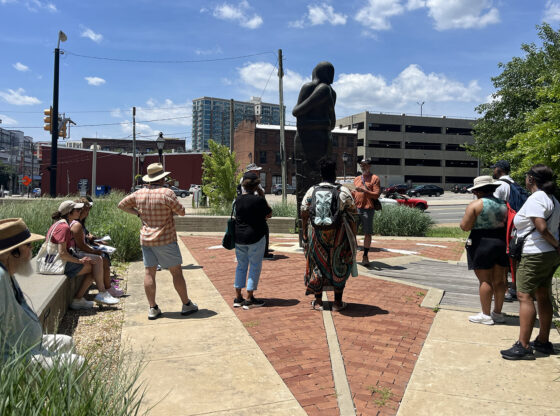

RICHMOND, Va. — The Manchester Docks once received tens of thousands of enslaved souls between 1830 and 1860, their chains clanking against a muddy trail that led to auction blocks and a lifetime of bondage. Today, that same path has become a pilgrimage route for spiritual reckoning. On a recent Saturday, about 20 Virginians walked in silence, some clinging to one another, as a gospel singer wove the refrain of “Wade in the Water” through the air. This was no mere historical tour—it was a sacred act of memory.
The daylong retreat, “Walking With the Enslaved,” emerged from a partnership between St. Paul’s Episcopal Church—once attended by Confederate General Robert E. Lee—and St. Philip’s Episcopal Church, one of the South’s oldest Black Episcopal congregations, founded in 1861 by enslaved and freed Richmonders. “Every time I looked out at the water, all I could see was people coming in on ships and disembarking,” said Renee Munford, a 65-year-old participant who wept during the silent march. “My heart bled for that.” The pilgrimage moves from the state Capitol to a notorious slave jail and ends at Richmond’s first African church, forcing congregations to confront the spiritual wounds their institutions helped create.
#SpiritualNews · #FaithAndCulture · #GlobalSpirituality