
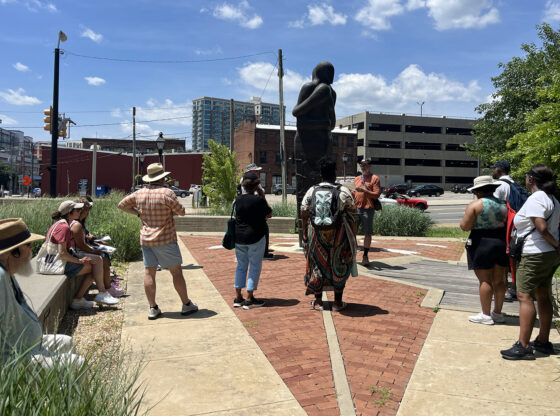

In Richmond, Virginia, the soil of the Manchester Docks still holds the memory of thousands who were forced ashore between 1830 and 1860. Today, that ground has become a classroom for spiritual reckoning. Two Episcopal congregations—St. Paul’s, once attended by Confederate leaders, and St. Philip’s, founded by enslaved and freed Black worshippers—have joined to create a pilgrimage that forces the church to confront its own entanglement with human bondage.
On a recent Saturday, about 20 pilgrims walked the old slave trail in silence, some clinging to one another as they retraced the steps of the enslaved from ship to auction house. A gospel singer lifted the spiritual “Wade in the Water,” its ancient cry for deliverance echoing across the same waters that once carried slave ships. “Every time I looked out at the water, all I could see was people coming in on ships,” said Renee Munford, 65, who wept as she walked. “My heart bled for that.”
The pilgrimage, called “Walking With the Enslaved,” moves from the state Capitol to a notorious slave jail, ending at Richmond’s first African church. It is not a tour but a liturgy of lament—a way for communities divided by history to walk toward a shared, honest future. In a city where the church once blessed the chains, these footsteps are a form of prayer.
#SpiritualNews · #FaithAndCulture · #GlobalSpirituality