
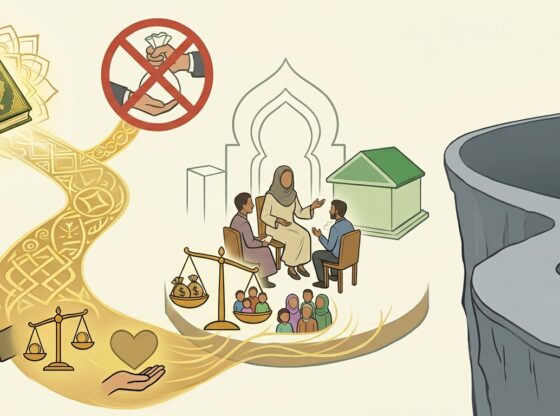

The Soul of Exchange: Reclaiming Economic Justice
In the quiet corridors of spiritual history, we often overlook the profound ethical architecture that governs our material lives. The emergence of Islamic Economics is not merely a financial theory; it is a reclamation of moral integrity in commerce. As Anwar Quraishi first explored in 1948, the prohibition of Riba (usury) was not just an economic constraint but a spiritual boundary designed to protect human dignity from exploitation.
Today, this discipline stands at a crossroads between tradition and modernity. It challenges us to ask whether wealth accumulation can coexist with compassion. By distinguishing itself from Western economic paradigms, it offers a unique lens through which we view independence—not as isolation, but as freedom from predatory systems. This shift invites believers to see every transaction as an act of worship, where justice and equity are the true currencies of the soul.