
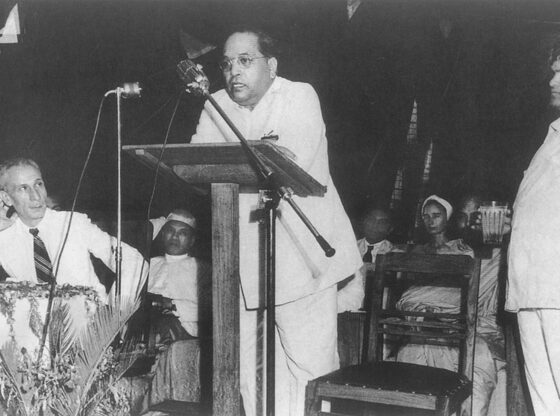

Ambedkar’s Radical Dharma: Buddhism as Social Revolution
The 1956 mass conversion led by B. R. Ambedkar was not merely a religious shift but a profound political act of self-liberation. For nearly half a million followers, embracing Navayana—New Buddhism—was a fierce rejection of the caste hierarchy that had long defined Indian society. Ambedkar viewed traditional reform as insufficient; he argued for the complete annihilation of caste through spiritual transformation.
In this framework, Buddhism becomes a vehicle for collective freedom from violence and social inequality. Unlike passive meditation practices, Ambedkar’s interpretation positions the Buddha’s teachings as a tool for revolutionary reconstruction. It challenges the notion that spirituality must be apolitical, instead framing enlightenment as inextricably linked to justice. This perspective invites practitioners to consider how ancient wisdom can fuel modern resistance against systemic oppression, turning personal awakening into a catalyst for societal change.