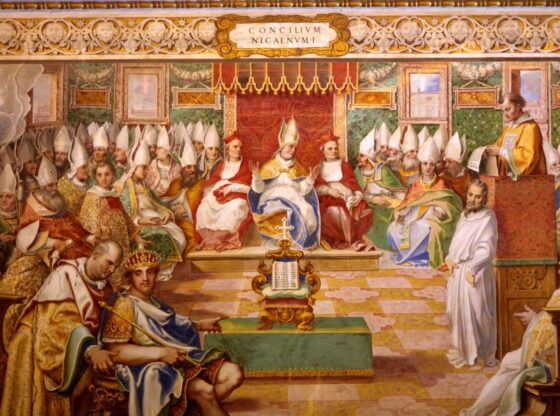

In an age of fleeting digital memories and disposable narratives, the fifth-century historian Theodoret of Cyrrhus offers a startlingly relevant meditation on the spiritual duty of remembrance. “When artists paint on panels and on walls the events of ancient history,” he wrote, “they alike delight the eye, and keep bright for many a year the memory of the past.” But for Theodoret, the historian’s task was not mere preservation—it was an act of worship.
His Ecclesiastical History, one of the earliest chronicles of the early church, frames the Council of Nicaea not as a dry theological debate but as a living witness to divine providence. Theodoret understood that memory itself is a spiritual discipline. “Historians substitute books for panels, bright description for pigments,” he observed, “and thus render the memory of past events both stronger and more permanent, for the painter’s art is ruined by time.”
What Theodoret grasped, and what we so often forget, is that the creeds and councils of the ancient church are not museum pieces. They are living testimonies, passed down by those who “had lived and died in the Faith before us.” To remember Nicaea is to participate in that same faith—to trust, as Theodoret did, in “the bounty of the Giver of all good” even when the task seems beyond our strength.