
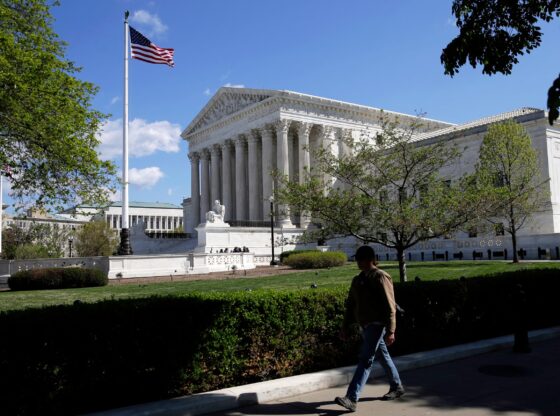

For 250 years, the United States Supreme Court has cast a long shadow over the spiritual and legal landscape of Indian Country. Yet, as the nation marks its anniversary, a deeper truth emerges: the highest court is not the arbiter of tribal destiny, but a distant interpreter of laws made by others. “The closest relationship is with the executive branch… and probably the most important one is Congress,” explains Matthew Fletcher, a citizen of the Grand Traverse Band of Ottawa and Chippewa Indians and a law professor at the University of Michigan. “The only rule that the Supreme Court has is to enforce the laws that Congress makes for treaty rights.”
This reveals a profound spiritual lesson for those seeking wisdom: true sovereignty is not granted by any external institution, but is a sacred trust held within a people. The Court hears only one to three federal Indian law cases per term, a mere whisper in the halls of power. Its rulings, often marked by a skepticism of tribal sovereignty and a fundamental misunderstanding of tribal governments, reflect a Constitution that says almost nothing about the original peoples of this land. The journey of tribal nations is not defined by these rulings, but by the enduring spirit that persists beyond the gavel’s echo.