
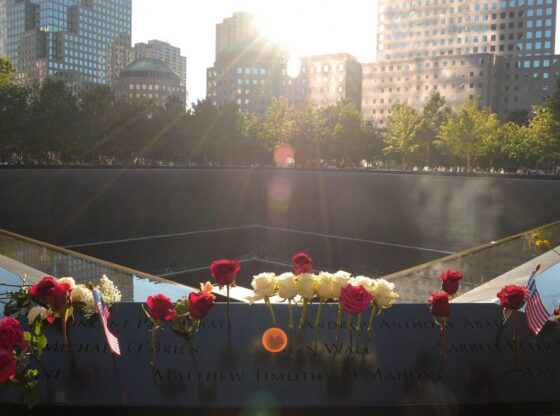

The Morning the Skyline Vanished: What 9/11 Taught a Meditator About the Self
On the morning of September 11, 2001, Josh Korda—a third-generation advertising art director, six years sober in a Twelve Step community—stepped off a subway train at Union Square into a city frozen mid-breath. He had been meditating each morning, “rhythm of breath steadying me amid Manhattan’s roar,” before heading to his agency job. What he found above ground shattered that steadiness.
“The towers are obscured by tremendous plumes of black smoke that billow against the cloudless sky,” he recalls. Crowds stood in “wordless communion,” watching an outdoor screen replay the collapse. He would later learn that several firemen he knew from Alcoholics Anonymous were already gone, “their laughter silenced beneath tons of steel and glass.”
Korda’s account, published by Tricycle, describes not only collective trauma but a dismantling of identity itself—the advertising man, the husband, the sober member of a familiar fellowship, all rendered provisional in an instant. For contemplatives, his testimony raises a question the Buddha posed long ago: if the self is a construction, what remains when the skyline of our certainties falls?