
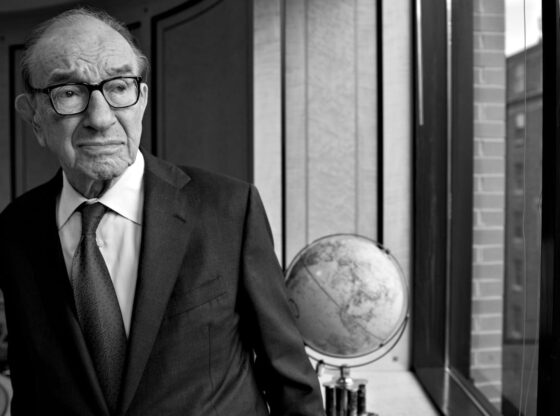

The passing of Alan Greenspan at age one hundred marks more than the end of a long life. It closes a chapter in the modern world’s search for secular salvation. Greenspan was not merely a central banker. He was the high priest of a new religion, one that promised stability through numbers, redemption through markets, and certainty through human expertise. The Federal Reserve chairman from 1987 to 2006 became the face of a creed that placed its faith not in divine providence but in the invisible hand of economic management. This is the story of how liberalism created its own magician and what his legacy reveals about the spiritual hunger that no spreadsheet can satisfy.
The elevation of Greenspan to oracular status was no accident. As the First Things tribute notes, the Nobel Prize in Economics was created in 1968 by Sweden’s central bank to bestow “an aura of scientific authority on the discipline of economics.” This was a deliberate act of mystification. Economics, once a branch of moral philosophy concerned with virtue and the common good, was rebranded as a hard science. Greenspan embodied this transformation. He spoke in cryptic phrases that markets parsed like ancient prophecies. His every utterance was scrutinized for hidden meaning. The world wanted a prophet, and the financial system obliged by manufacturing one. Yet the wisdom traditions remind us that when we seek oracles in human institutions, we abandon the search for transcendent truth.
The deeper context here is the ancient human temptation to idolatry. The biblical prophets warned against trusting in chariots and horses—the military and economic powers of their day. Today’s chariots are central banks and GDP figures. The Talmud teaches that the world stands on three things: justice, truth, and peace. The Greenspan era promised peace through prosperity, but it was a fragile peace built on debt and illusion. When the financial crisis of 2008 shattered the illusion, the temple of economic certainty collapsed. The magician’s wand was broken. Yet the hunger for a new oracle remains. Every generation seeks a figure who can promise control over chaos, whether through interest rates or algorithms or political programs. The spiritual lesson is clear: no human system can bear the weight of ultimate trust.
The takeaway for the seeker of wisdom is this: the desire for certainty is itself a spiritual impulse, one that can be directed toward God or toward idols. Greenspan’s career demonstrates the seductive power of expertise divorced from moral foundations. When we treat economic growth as the highest good and technical competence as the highest virtue, we hollow out the soul of society. The ancient Christian tradition speaks of the “sin of presumption”—acting as if we can secure our own salvation through our own efforts. Modern liberalism, in its economic guise, made exactly this presumption. The true wisdom lies not in rejecting all human expertise but in recognizing its limits. We are called to trust in Providence, not in prognosticators. We are called to seek justice, not merely growth. And we are called to remember that the only true master of the universe is the one who created it.