
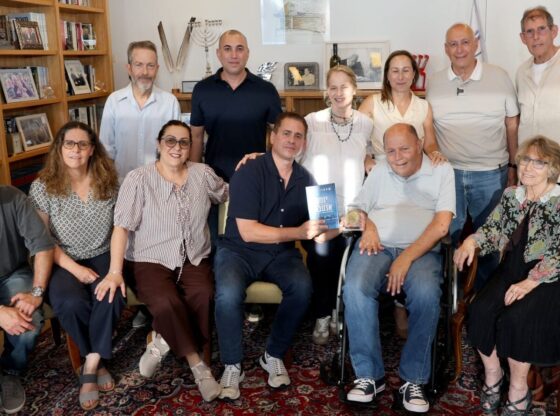

Fifty years after Israeli commandos stormed the Entebbe airport in Uganda to free more than 100 hostages, the survivors gathered not to celebrate a military triumph but to mourn a broken covenant. At a reunion held at the Peres Center for Peace and Innovation in Jaffa, former hostages spoke openly about how the October 7, 2023 attacks shattered their faith in Israel’s sacred promise of rescue. For them, Entebbe was never merely a military operation—it was a national act of spiritual solidarity, a declaration that no Jew would be abandoned. The events of October 7, when Hamas militants took hundreds hostage and the state’s response faltered, has forced these survivors to confront a painful theological question: What happens when the community that once embodied redemption fails to uphold its most sacred duty?
The spiritual significance of Entebbe has always transcended its tactical brilliance. The operation, later renamed Operation Yonatan after the fallen commander Yoni Netanyahu, represented the Jewish principle of pidyon shevuyim—the redemption of captives—elevated to a national imperative. In Jewish tradition, this mitzvah is considered so urgent that communities may sell synagogue scrolls to secure a hostage’s freedom. The Entebbe raid, coming just three decades after the Holocaust, sent an unmistakable message: the Jewish state would go to any length to prevent history’s abandonment from repeating. Yet as one survivor noted at the reunion, the contrast between the government that authorized the 1976 mission and the one that took hours to respond on October 7 has created a spiritual crisis. The released cabinet minutes from 1976 show ministers abandoning their no-negotiation policy while preparing the rescue—a flexibility that seems unimaginable in today’s rigid political landscape.
Wisdom traditions teach that faith is tested not in moments of triumph but in times of apparent failure. The Entebbe survivors, now in their seventies and eighties, find themselves in a unique position to offer spiritual counsel. Their experience reveals that rescue is not merely a physical act but a spiritual contract between a people and its institutions. When that contract is broken, the wound is not political—it is existential. The Jewish concept of tikkun olam, repairing the world, requires constant vigilance. The Entebbe generation understood that redemption is not a one-time event but an ongoing responsibility. As the released documents show, Israel’s leaders in 1976 were willing to contradict their own stated policies to save lives—a humility that spiritual traditions recognize as essential to true leadership. The question now facing Israel is whether it can recover that moral flexibility.
For the spiritual seeker, the Entebbe reunion offers a profound lesson about the nature of hope. The survivors did not gather to relive past glory but to acknowledge a painful truth: redemption is fragile, and faith requires constant renewal. The hijacking of Air France Flight 139 began with a stop in Athens, where terrorists from the Popular Front for the Liberation of Palestine and Germany’s Revolutionary Cells seized the plane before diverting it to Uganda, where Idi Amin provided safe haven. The hostages were separated by nationality and religion—a chilling precursor to later atrocities. Yet the rescue that followed became a symbol of what collective action, guided by spiritual purpose, can achieve. The takeaway for today’s reader is clear: the promise of rescue is not a guarantee but a covenant. It demands that we hold our leaders accountable, that we remember the sacred duty to redeem captives, and that we never mistake past heroism for future safety. The Entebbe survivors remind us that faith is not believing in rescue—it is demanding it.