
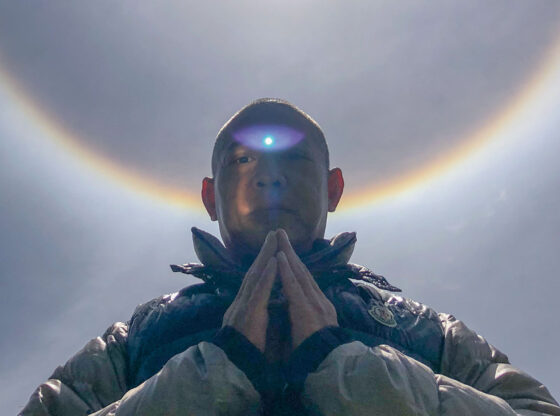

In the 1980s, Jet Li was a young martial arts star whose first film, Shaolin Temple, catapulted him to fame across Asia. Yet the clamor of celebrity left him hollow, seeking refuge in an unlikely sanctuary: a Beijing temple that opened to the public by day and closed its gates by night. “After five o’clock in the afternoon, nobody bothered me,” Li recalled in a recent interview with Lion’s Roar. This quiet space became his first classroom in a spiritual inquiry that would span decades. Li’s story is not merely a celebrity memoir—it is a living parable about the failure of worldly achievement to deliver lasting peace.
Li’s journey matters spiritually because it mirrors a universal human struggle: the relentless pursuit of happiness through external success. “People always said you should work hard and become famous. That way, you’ll have money and can get anything you want, and then you will be very happy,” Li explained. Yet his experience contradicted this promise. “Happiness was very short lived. If I made a movie that was very successful, I was happy for only one or two months. Then if the next movie wasn’t as successful, I was unhappy.” This cycle of craving and disappointment, known in Buddhist teaching as dukkha, is the very problem the Buddha diagnosed 2,500 years ago. Li’s honest admission gives us permission to question our own attachments to status and wealth.
Deeper wisdom traditions across the globe echo this insight. The Buddha’s First Noble Truth recognizes that suffering arises from clinging—to fame, security, identity. Li’s reading of The Tibetan Book of Living and Dying catalyzed his awakening: “We’re nervous because we want to keep our life secure. We want more money, more power, more things. But in the end, we will all die. Then we’ll leave everything behind.” This mirrors the contemplative traditions of memento mori found in Christian monasticism and Stoic philosophy. Li’s formal commitment to Buddhism in 1997 was not an escape but an embrace of reality. “Being free happens only on the inside,” he said, a truth echoed by sages from Rumi to Thich Nhat Hanh.
The takeaway for the reader is both practical and profound. Li offers no quick fix but a path of gradual transformation: “Learning more and more from Buddhism for more than thirty years, I’ve found a way to be more at ease, much happier, much more relaxed.” His advice for those still grasping at worldly success is radical simplicity—not renunciation of life, but renunciation of the illusion that life’s meaning lies in accumulation. We can start by noticing the temple within: that quiet space after five o’clock where no one bothers us, and where we can ask ourselves what we truly seek. As Li discovered, the search for truth begins when we admit that what we have chased is not enough—and that the freedom we crave has always been inside.