
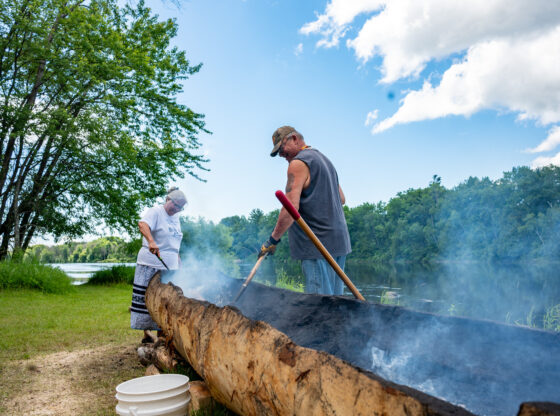

On the banks of the Menominee River this summer, a pine log is being transformed into a vessel of cultural resurrection. Water protectors Dawn M. Wilber and Wayne Swett have spent weeks camped at Chappee Rapids, burning, scraping, and sanding a 17-foot log into a traditional dugout canoe—or Maeqtek-ōs—for the first time in living memory. “It’s making a statement, we’re making history,” Swett told reporters, his arms bearing the heat blisters of sacred labor. When the canoe launches this week for a 48-mile journey south, it will carry more than paddlers; it will carry the weight of a people’s reconnection to ancestral waterways.
For spiritual seekers, this act transcends mere historical reenactment. The dugout canoe represents what Indigenous traditions call “the old way of knowing”—a practice where spiritual meaning is inseparable from physical labor. Wilber described the work as “a suffrage of sort,” acknowledging that bodily sacrifice is essential when reviving sacred traditions. In many wisdom traditions, from Native American to Eastern philosophies, the body is understood as the first temple, and physical hardship becomes a form of prayer. The blisters on Swett’s arms are not wounds but offerings—marks of devotion to ancestors who once navigated these same waters in vessels carved by hand.
This eighth annual canoe journey by the Protectors of the Menominee River reveals a deeper spiritual truth: water is not merely a resource but a living relative. In Menominee cosmology, rivers are conduits between the physical and spiritual worlds, carrying prayers to the Creator. The act of building and paddling a dugout canoe restores a relationship that settler colonialism disrupted—one where humans move with the current rather than against it. “When we go down the river, the first two days, I like to reconnect,” Wilber noted, echoing a universal spiritual principle found in traditions from Taoism to Sufism: that true wisdom flows from surrendering to nature’s rhythms rather than imposing human will upon them.
The community effort behind this canoe—with the log donated by Menominee Tribal Enterprises and daily visitors bringing supplies—mirrors the communal nature of traditional spiritual practice. No spiritual journey is undertaken alone; even the solitary mystic relies on the support of a community that holds the sacred knowledge. For readers seeking wisdom, the Menominee dugout canoe offers a powerful teaching: spiritual revival often begins with humble, hands-on work. A pine log, fire, and human intention become a vessel for transformation. The question this story poses to each of us is not whether we will build a canoe, but what sacred practice we might resurrect in our own lives—and what river we are called to travel in reconnection with the divine.