
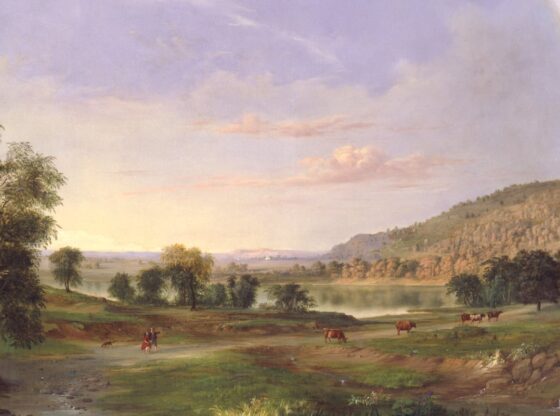

In a recent symposium published by First Things, contributors were asked to meditate on a question both ancient and urgent: In what place do you find America incarnate? The responses, drawn from personal reflection and spiritual discernment, point not to monuments or capitols, but to the quiet landscapes where trust still lives. One writer described a year spent in central Wisconsin, renting a house with a stream in back and an Amish farm across the road. In that small town of 447 souls, the bank teller sang out his name, the postmistress opened the door after hours, and eggs and vegetables were left in a room with a coffee can for payment—no surveillance, no signature, no suspicion.
This vision of America is not a political creed but a spiritual geography. It is the land where covenant precedes contract, where neighborliness is not a program but a pulse. The writer’s encounter with the Amish community is especially telling: a people who have long rejected the speed and spectacle of modernity in favor of a slower, more deliberate fidelity to God and one another. In their silent transactions—dollars left in a coffee can, goods taken on honor—we see a living parable of trust. This is not naïveté but a disciplined spiritual practice, rooted in the belief that the divine order holds all things together, even when no one is watching.
The deeper wisdom here echoes what the great spiritual traditions have always taught: that the soul is formed not in abstraction but in place. The desert fathers knew this, as did the monks of Mount Athos and the hermits of the Irish coast. To be rooted in a particular patch of earth, to know the names of one’s neighbors and the rhythm of the seasons, is to participate in the sacred economy of creation. The writer’s twenty-mile bike rides along roads lined with cornfields and stands of pine, the pitch-black nights broken only by the brightest moon, the rare sound of a crop duster—these are not mere pastoral details. They are the sacraments of a life lived in attentiveness to what is real.
For the seeker of wisdom, the takeaway is this: the nation’s soul is not found in its creeds alone, however noble, but in the daily, embodied practice of trust and hospitality. Martin Luther King Jr. knew this when he named every hill and molehill of Mississippi—not to romanticize them, but to call them to their highest calling. America is incarnate wherever a door opens after closing time, wherever a voice calls out in welcome, wherever the silence is deep enough to hear the still, small voice. The task of the spiritual life, and of the spiritual nation, is to cultivate such places—and to become such people.