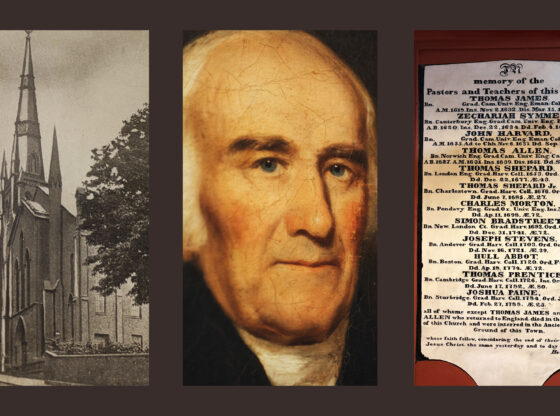

In the quiet port town of Charlestown, Massachusetts, a spiritual experiment unfolded that offers profound lessons for any faith community facing decline. In 2022, pastor John David Mangrum and his team of elders sat down with the remaining congregants of First Church—a historic institution approaching its 400th anniversary—to discuss merging with Mangrum’s newer church plant. The turnout was stark: only two women appeared, including 90-year-old Ms. Pat, who had attended First Church for nearly a quarter of its four-century existence. “Ms. Pat, what would it take for you to embrace this merger?” Mangrum asked, according to reports. Her response, simple yet profound, became the cornerstone of a revitalization that has since drawn attention from spiritual leaders across traditions.
This moment reveals a deeper spiritual truth about the nature of sacred institutions. In wisdom traditions worldwide, the concept of death and resurrection is not merely a theological doctrine but a living pattern. Just as the seed must fall to the ground and die to bear fruit, so too must religious communities sometimes surrender their attachment to form to rediscover their essence. First Church’s willingness to merge—to allow its historic identity to be transformed rather than preserved in amber—mirrors the ancient monastic practice of “kenosis,” or self-emptying. The church did not cling to its 400-year legacy as a shield against change; instead, it opened itself to being reimagined.
The deeper context here echoes teachings found across spiritual paths. In the Buddhist tradition, impermanence (anicca) is seen as the very ground of possibility—the recognition that all forms, no matter how venerable, must eventually give way to new expressions of truth. Similarly, the Hindu concept of “lila,” or divine play, reminds us that the sacred is not static but eternally creative. First Church’s journey from a nearly empty sanctuary to a merged community participating in what Mangrum calls “the work of the kingdom” illustrates how letting go can become the most faithful act of all. The remaining congregants did not mourn their loss; they embraced a new covenant, one that honored the past while stepping boldly into an unknown future.
For the spiritual seeker, this story offers a powerful takeaway: revitalization begins not with new programs or better marketing, but with a willingness to release what no longer serves the soul’s purpose. Whether applied to a church, a personal practice, or a community tradition, the principle is the same—growth requires surrender. Ms. Pat’s simple question, and the elders’ humble response, transformed a potential ending into a sacred beginning. As the Atlantean Tribune has often noted, the most authentic renewal arises not from preserving the old but from allowing the Spirit to breathe new life through the cracks in our familiar structures. First Church’s 400-year legacy is not lost; it is reborn, carried forward in the hearts of those who dared to let it die so it could live again.