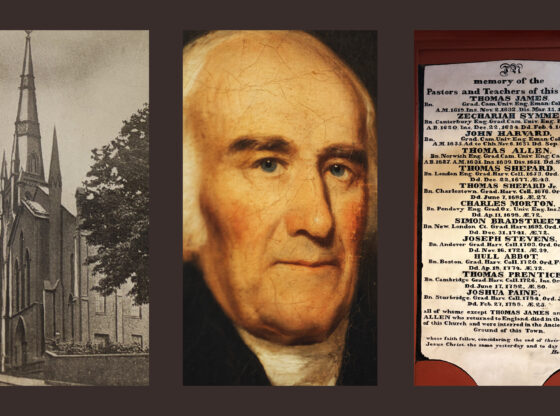

In the annals of spiritual history, institutions often outlive their founders by centuries, yet face a quiet crisis of meaning when their pews grow empty. Recently, a remarkable story emerged from Charlestown, where a 400-year-old church, First Church, faced its twilight—only to be revitalized through an unexpected union with a younger congregation. In 2022, Pastor John David Mangrum and his elders met with the remaining members of First Church. Only two women attended, including 90-year-old Ms. Pat, who had worshipped there for nearly a century. When asked what she wanted for the church’s future, she replied, “I just want the doors to stay open for my grandchildren.” That simple plea became the catalyst for a merger that breathed new life into an ancient sanctuary.
This story resonates far beyond a single congregation. It speaks to a universal spiritual truth: that renewal is not about discarding the old but about honoring its essence while allowing new forms to emerge. In wisdom traditions across the world, from the Hindu concept of dharma—the duty to preserve sacred order—to the Buddhist teaching of anicca (impermanence), we find that institutions must adapt to survive. The challenge for First Church was not its age but its isolation. As Mangrum noted, “We didn’t come to save a building; we came to carry a flame.” This echoes the ancient Greek idea of paradosis, the handing down of sacred knowledge, which requires living vessels, not just stone walls.
The deeper spiritual meaning here lies in the tension between tradition and transformation. Many wisdom texts, from the Tao Te Ching to the Christian Gospels, warn against idolizing forms while neglecting the spirit. When Ms. Pat expressed her desire for grandchildren to have a place of worship, she was invoking a timeless principle: that faith must be passed on, not preserved in amber. The merger succeeded because both groups understood that the church was not the building but the community. As one elder put it, “We had to let go of our attachment to how things used to be, so we could welcome what God was doing now.” This is a lesson for any seeker: spiritual vitality requires releasing the past’s grip without forgetting its gifts.
For the reader seeking wisdom, this story offers a profound takeaway: renewal begins with a single, heartfelt question. Ms. Pat’s desire for her grandchildren was not about nostalgia but about hope. In a world where many spiritual institutions face decline, the path forward is not to cling to old structures but to ask, “What is the living purpose here?” The answer may require merging, adapting, or even letting go of what we love. Yet, as the Charlestown church discovered, when we focus on the flame rather than the vessel, the fire can burn for another 400 years. Let this be a meditation for your own life: what sacred flame are you carrying, and how can you pass it on to the next generation?