
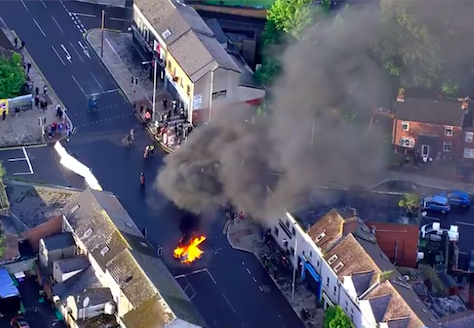

In the wake of another night of unrest following a brutal knife attack, leaders from across Belfast’s Christian community have expressed profound grief, describing themselves as “heartbroken” over the violence that has once again gripped the city. Speaking with a unified voice, church representatives from diverse traditions gathered to pray not only for the victims but for the soul of Northern Ireland itself, acknowledging that the wounds visible on the streets are merely symptoms of deeper spiritual fractures. “We stand together in prayer for our city and our nation,” they declared, recognizing that the path to peace cannot be paved by politics alone but must be rooted in spiritual transformation.
The unrest, ignited by a single violent act, has exposed the fragile membrane that separates communal peace from chaos. From a spiritual perspective, this moment reveals a profound truth: external violence is always the echo of internal dislocation. The churches’ response—prayer rather than protest, lament rather than blame—offers a counter-narrative to the cycle of retaliation. In Christian tradition, the concept of kenosis, or self-emptying, calls believers to absorb suffering rather than pass it on. The Belfast churches embody this ancient wisdom, refusing to let anger become the final word.
Across wisdom traditions, the connection between individual tragedy and collective turmoil is well documented. The Hebrew prophets understood that a society’s moral health could be read in its treatment of the vulnerable and its response to crisis. Likewise, the Buddhist teaching of pratityasamutpada—dependent origination—reminds us that no act occurs in isolation; the knife attack and the subsequent unrest are linked in a chain of causation that includes historical grievances, economic despair, and spiritual emptiness. The churches’ call to prayer is not escapism but an acknowledgment that lasting peace requires addressing the invisible roots of visible violence.
For the spiritual seeker, Belfast’s anguish offers a universal lesson: communities, like individuals, must face their shadows or be consumed by them. The churches’ posture of heartbreak—vulnerable, honest, and turned toward God—models a way forward that avoids both naive optimism and cynical despair. True peace is not the absence of conflict but the presence of justice tempered by mercy. As the Apostle Paul wrote, “We do not wrestle against flesh and blood, but against the spiritual forces of evil.” The streets of Belfast are a battlefield, but the churches remind us that the most decisive combat occurs in the human heart. The takeaway is clear: when violence erupts, the spiritual response is not to match fire with fire, but to become living water for a parched and burning world.