

When the Forest Temple Calls: What a Welsh Ashram Reveals About Druidry’s Universal Roots
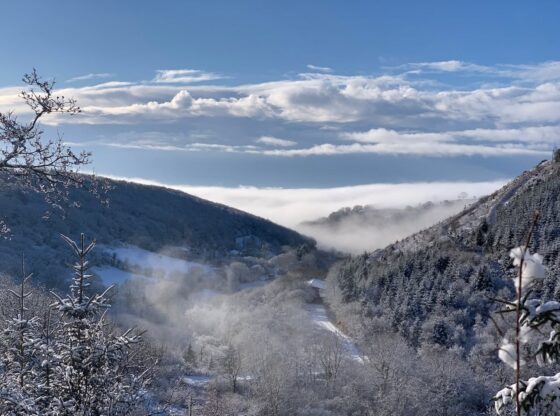
Deep in the winding hills of Carmarthenshire, where the road narrows to a ribbon of uncertainty, lies a landscape that defies easy categorization. Skanda Vale, home to the Community of the Many Names of God, is not merely a South Asian temple complex transplanted onto Celtic soil—it is a living testament to the shared spiritual grammar that underlies all sacred traditions.
For the contemporary Druid, this 300-acre sanctuary of woodland, meadow, and shrine offers more than curiosity. It presents a mirror. The incense that drifts through the valley on a quiet Wednesday morning carries the same reverence for place, for the living earth, that animates Druidic practice. Here, the puja is not an exotic import but a familiar rhythm—an offering to the divine presence that dwells in every grove and hollow.
Salvatore Shyam Garfi, a self-described “polydox” seeker who moves through spirituality as one moves through a landscape, found himself “literally thunderstruck” by the resonance. His insight is profound: Druidry need not be confined to one cultural expression. The sacred is polyphonic, speaking through many names and forms, and Skanda Vale demonstrates that the meeting of traditions is not a dilution but a deepening.
For those walking a Druidic path, this Welsh ashram is an invitation—not to abandon one’s roots, but to recognize that the soil of the sacred is everywhere the same.