
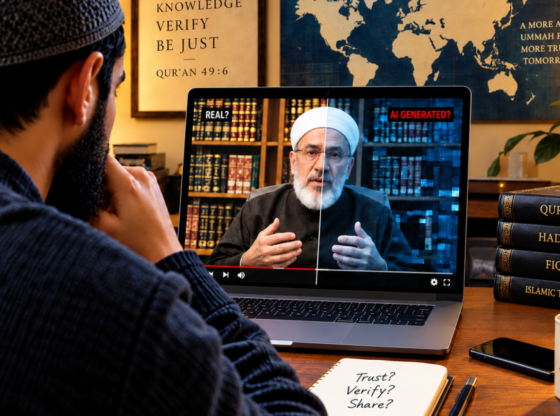

The Erosion of the Witness: When Voice No Longer Vouches for Truth
The crisis of trust in religious authority is not merely a technological glitch but a profound epistemological rupture. For centuries, Islamic scholarship relied on the integrity of the witness (*shahada*) and the verifiable chain of transmission (*isnad*). Today, synthetic media severs this link, allowing words to be detached from their source entirely. The danger lies not in the machine’s ability to lie, but in its capacity to mimic the familiar cadence of trusted scholars with such precision that skepticism becomes impossible.
This phenomenon challenges the very foundation of testimonial knowledge. As noted in recent discourse, “The ordinary signs by which we have learned to recognize testimony are becoming less secure.” When a face no longer guarantees presence and a voice no longer confirms speech, we face a void where certainty once resided. This is not simply about digital literacy; it is about the collapse of the social contract of truth. In an age where fabrication requires no effort, the spiritual discipline of verification must return to the forefront of communal life, reminding us that before we accept what is heard, we must first question who is speaking.