
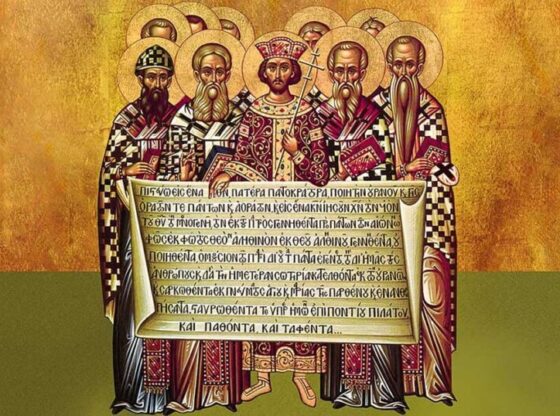

When Eternity Interrupted Time: The Hidden Revolution of Nicaea
In the year 325, three hundred bishops gathered in a small Bithynian town not to invent doctrine, but to defend a mystery that had already transformed the world. The Council of Nicaea did not create the Christian faith—it gave voice to what believers had been whispering in catacombs and proclaiming in martyrdom for three centuries.
The Nicene Creed, far from being a dusty artifact, represents a radical claim about the nature of reality itself. When it declares Christ “begotten, not made, of one Being with the Father,” it asserts that the infinite has personally entered the finite—that the Creator has become creature without ceasing to be Creator.
“For us and for our salvation he came down from heaven,” the Creed proclaims. This is not abstract theology but the heart of spiritual hope: that matter matters, that history has meaning, that the divine is not remote but intimately near. The Council understood that if Christ is merely a created being, however exalted, then humanity remains separated from God by an unbridgeable chasm.
The Creed’s enduring power lies in its refusal to reduce mystery to manageable formulas. It invites worshippers into contemplation rather than complete comprehension—a lesson as urgently needed today as in the fourth century, when empires and egos threatened to fragment the church’s witness to the God who became flesh.