
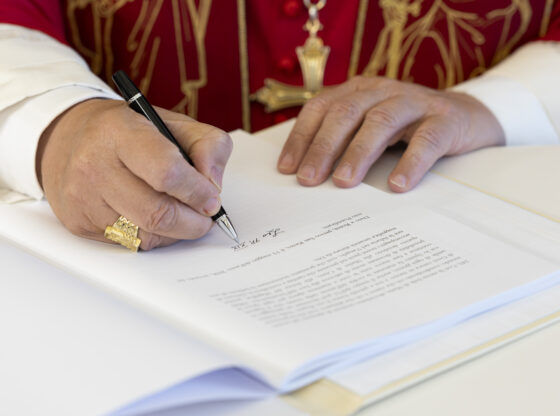

The recent dismissal of Spanish priest Francisco José Vegara Cerezo from the clerical state by Pope Leo XIV marks a solemn moment in the life of the Church, one that transcends a mere canonical procedure and touches upon the deeper spiritual realities of obedience, unity, and the nature of ecclesial communion. Vegara Cerezo, who had served in the Diocese of Orihuela-Alicante, was laicized after a protracted process that began in 2023, when he published a 20-page manifesto labeling Pope Francis a “heretic” and questioning the validity of his election. His subsequent refusal to recognize the authority of Pope Leo XIV, combined with public criticism of key documents such as Amoris Laetitia and Fiducia Supplicans, led to his eventual dismissal.
For the spiritual seeker, this event is not merely a news item about ecclesiastical discipline; it is a profound reminder of the ancient wisdom that binds all authentic spiritual traditions. At its core, the Vegara Cerezo case illustrates the perennial tension between personal conviction and communal authority—a tension that, when untethered from humility, can fracture the very fabric of spiritual life. The Catholic tradition, like many wisdom paths, teaches that the health of the soul depends on a delicate balance between inner discernment and outward submission to a greater whole. When a disciple elevates his own judgment above the living tradition and its appointed guardians, he risks not only excommunication in a formal sense but a deeper spiritual isolation.
Bishop José Ignacio Munilla, in his statement, called for prayers for Vegara Cerezo and recalled the words of Pope Leo XIV spoken in the Canary Islands: “When you encounter difficulties, lift your gaze and ask the Holy Spirit for the grace to…” This unfinished exhortation points to the heart of the matter. The grace of the Holy Spirit, in the Christian understanding, is not a license for private revelation that contradicts the community of faith. Rather, it is the very bond of charity that holds the Body of Christ together. The mystics of the Church have long taught that pride—even when dressed in the garments of doctrinal purity—is the root of schism. Saint John of the Cross warned that a soul which clings to its own light, rejecting the guidance of spiritual authority, walks in darkness.
For readers seeking wisdom, the takeaway is clear: spiritual growth requires the courage to submit to something larger than oneself. Whether in the Catholic Church, a Buddhist sangha, or a Sufi order, the principle holds—that the path to true freedom passes through the gate of obedience. The dismissal of Francisco José Vegara Cerezo is a stark illustration of what happens when that gate is refused. Yet, as Bishop Munilla’s call for prayer suggests, there is always room for repentance and return. The spiritual journey is not about being right, but about being united in love. Let this event serve as a mirror for our own hearts: where do we resist authority, and can we trust that the Spirit speaks even through those we disagree with?