
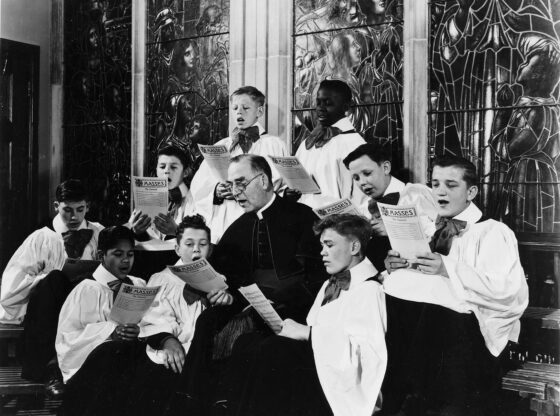

The Radical Vision of Love That Transformed Child Welfare
When Venerable Father Edward J. Flanagan declared that “there is no such thing as a bad boy,” he was not merely offering comfort—he was issuing a spiritual revolution. More than a century after founding what became Boys Town, his radical conviction that every child bears the image of God continues to reshape how society views the vulnerable.
Thomas Lynch, historian and director of community programs at Boys Town, explains that Flanagan’s approach emerged not from social theory but from the depths of Catholic sacramental imagination. “He had special ideas and concepts in child care that were so radical,” Lynch told EWTN News, “but it came from his concepts of being a Catholic priest of love and dignity for the individual.”
That dignity extended beyond the children in his care. Flanagan became “a great champion for civil rights,” Lynch noted, traveling across America to advocate for equality “regardless of a person’s race or religion.” During World War II, he went out of his way to aid Japanese American families, seeing in their suffering the same sacred worth he recognized in every homeless boy who arrived at his door.
Declared Venerable by Pope Leo XIV in March 2026, Flanagan’s canonization cause advances not because of his institutional achievements—though Boys Town now reaches over 2 million families annually—but because his life witnessed to a truth the world still struggles to embrace: that love, when rooted in the divine, has the power to remake the very structures that confine human potential.