

When Bishops Listen: The Synodal Shift Reshaping African Catholicism
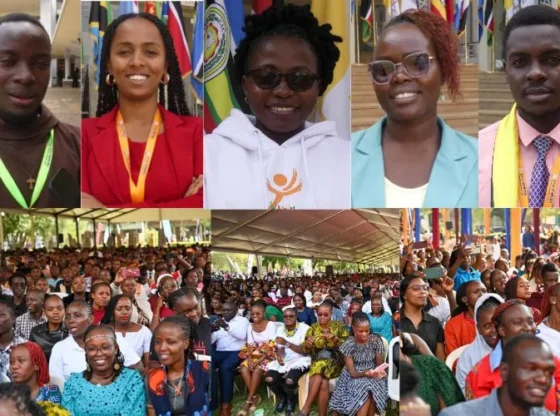
In Nairobi, a quiet revolution is unfolding within the halls of the 21st AMECEA assembly. While the official theme speaks of “Building Bridges of Communion, Hope, Justice, and Good Governance,” the deeper spiritual significance lies in a radical inversion of Church hierarchy: over 100 bishops are sitting at the feet of the young.
This is not merely a youth outreach program. It represents a fundamental reorientation of ecclesial authority toward the prophetic voice of the next generation. Georgette George Wani, a delegate from South Sudan, captures the essence of this shift: “I am grateful to our bishops for giving us this opportunity to engage with them, to share our experiences, and to discuss the challenges we face both in the Church and in our countries.”
The spiritual wisdom here is ancient yet urgent. In a synodal Church, the bishop’s role transforms from distant authority to spiritual companion. As Wani notes, young people grappling with digitalization and modernization are not asking for solutions—they are asking for accompaniment. “Guide us and accompany us on our journey,” she implores, recognizing that authentic spiritual formation requires presence, not pronouncements.
The AMECEA assembly thus becomes a living parable: the hierarchy descending from its throne to walk alongside those who carry the Church’s future in their trembling hands.