
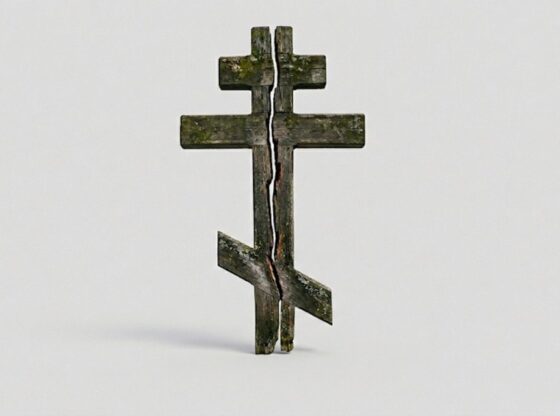

The Threshold of Communion: How the Orthodox Church Distinguishes Crisis from Rupture
Throughout its two-thousand-year history, the Orthodox Church has never been a stranger to tension. Yet a profound distinction exists between the storms that test the Church and the fractures that break it—a distinction rooted not in politics or jurisdiction, but in the very nature of communion itself. As one theologian observes, “A challenge remains a challenge so long as it is received, interpreted, and responded to within the Church’s own self-understanding as communion.”
The contemporary landscape presents the Orthodox faithful with pressures both external and internal. Secularism, nationalism, and geopolitical entanglements each demand a response. But the true danger, spiritual leaders warn, is not the pressure from without—it is the gradual erosion of clarity from within. When the Church begins to lose sight of what it means to exist as the Body of Christ, when Eucharist and synodality cease to be the primary criteria of ecclesial life, then a challenge has crossed into something far more perilous.
Schism, in the deepest sense, is not merely administrative disagreement. It is the rupture of Eucharistic recognition—the moment when Churches can no longer see one another as members of the one Body. The faithful are called to discern: are we facing a challenge that calls for deeper communion, or are we approaching the threshold where communion itself is forgotten?