
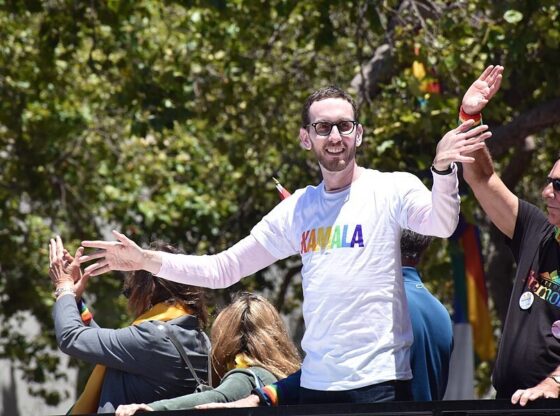

In a striking event that has rippled through the spiritual and political landscape of California, state Sen. Scott Wiener was physically driven out of San Francisco’s annual Trans March by activists who accused him of condoning “genocide in Gaza.” The scene, captured on video, shows Wiener surrounded by a hostile crowd, forced to retreat under a hail of accusations. While the incident is often framed as a clash of political ideologies, its deeper resonance speaks to a spiritual crisis within modern activism—a loss of the soulful discernment that once guided movements for justice.
Wiener, a Democratic lawmaker known for his advocacy on LGBTQ+ issues, later condemned the “physical intimidation and harassment” he experienced. He stated, “I will not be silenced by bullies,” and emphasized the need for respectful dialogue. Yet the activists’ anger was directed at his stance on Israel’s military actions in Gaza, a foreign policy issue far removed from the original purpose of the Trans March. This disconnect reveals a fragmentation of purpose, where the sacred space of a march—a ritual of solidarity and visibility—becomes a battlefield for unrelated grievances. In spiritual terms, this is a form of misdirected energy, a failure to hold space for the specific intention that gathers a community.
From the perspective of wisdom traditions, this event echoes ancient teachings about the dangers of mixing sacred causes with worldly anger. The Bhagavad Gita warns against action driven by ego and anger, urging instead for a detached, disciplined approach to duty. Similarly, Christian mystics like Thomas Merton spoke of the “false self” that clings to righteous indignation, mistaking it for virtue. The activists’ actions, while rooted in a genuine concern for Palestinian lives, became a vehicle for aggression—a betrayal of the nonviolent principles that have historically empowered marginalized groups. The Trans March, at its core, is a pilgrimage for visibility and safety; hijacking it for other causes dilutes its spiritual power.
The takeaway for the seeker is clear: activism must be rooted in inner peace, not outer turmoil. True justice work arises from a place of compassion, not condemnation. As the Dalai Lama teaches, we can oppose actions without hating the actor. The incident with Wiener is a mirror for all who engage in social change—a reminder that the means must align with the ends. If we allow anger to dictate our movements, we become what we resist. For the reader, this is an invitation to examine your own motivations: Are you fighting for love or from fear? The world needs warriors of the heart, not soldiers of outrage.