
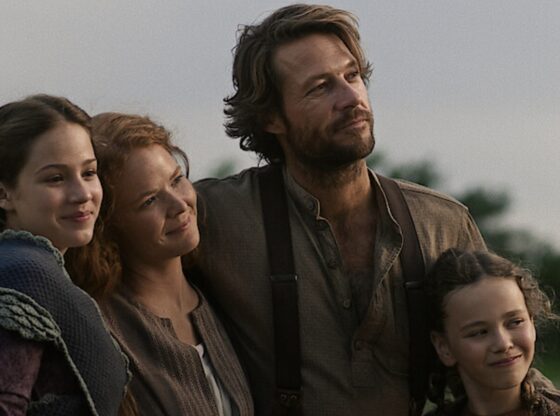

In an era of digital noise and fractured discourse, Netflix has announced a new adaptation of Laura Ingalls Wilder’s “Little House on the Prairie” series, bringing the Ingalls family’s story to a new generation. While the secular press frames this as entertainment nostalgia, the Atlantean Tribune sees a deeper resonance: this is a spiritual parable about finding grace in simplicity, resilience in hardship, and unity in shared struggle. The series, set to premiere in 2025, follows the Ingalls family as they carve a life from the American frontier—a journey that mirrors the soul’s own pilgrimage through material scarcity toward spiritual abundance.
The spiritual significance of this story lies not in its historical accuracy but in its archetypal power. The prairie itself becomes a symbol of the wilderness of the human heart—vast, untamed, and demanding faith. Laura Ingalls Wilder’s own words, preserved in her memoirs, remind us that “the real things haven’t changed. It is still best to be honest and truthful; to make the most of what we have; to be happy with simple pleasures; and to be cheerful and have courage when things go wrong.” This is not mere optimism but a form of spiritual discipline, echoing the wisdom of the Desert Fathers who found God in barren landscapes. The Ingalls family’s log cabin, with its single room and meager possessions, becomes a temple of contentment—a stark contrast to the cluttered altars of modern consumerism.
Wisdom traditions across cultures affirm that scarcity can be a teacher. The Buddhist concept of santosha—contentment with what one has—finds its Western expression in the Ingalls’ gratitude for a warm fire or a jar of preserves. The Christian mystic Meister Eckhart wrote that “if the only prayer you ever say in your entire life is thank you, it will be enough.” The “Little House” stories, at their core, are a chronicle of such prayers—offered in blizzards, crop failures, and the quiet of a prairie night. In a time when America yearns for healing, this narrative offers a forgotten medicine: the recognition that true wealth is measured not in possessions but in presence, not in comfort but in community.
The takeaway for the spiritual seeker is profound: the path to unity does not require grand gestures or political alignment. It begins in the small, daily acts of kindness that the Ingalls family models—sharing a meal with a stranger, repairing a neighbor’s fence, singing hymns by lamplight. As we watch this adaptation, we are invited to ask: What is our own prairie? Where are we called to simplify, to endure, to love? The frontier of the soul is always open, and the pioneer spirit that tamed the American wilderness is the same spirit that can tame the wilderness of division within us. Let us not watch merely for entertainment, but as pilgrims seeking a lamp for our own journey home.