
What Tom Holland and Seven Others Teach Us About the Spiritual Mechanics of Surrender
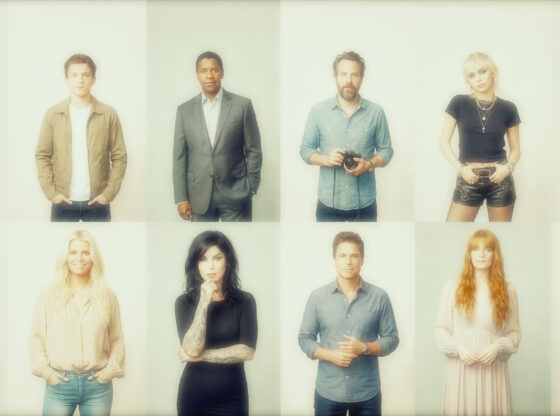
In an age of curated personas and algorithmic authenticity, sobriety has emerged as one of the few territories where public figures speak without a script. The pattern is striking: eight celebrities, eight different paths, and yet nearly every account eventually circles back to something that looks remarkably like conversion — not to a religion, necessarily, but to a posture of surrender that faith traditions have described for millennia.
Tom Holland’s story is instructive precisely because he does not use spiritual language. After a Christmas of excess in 2021, he attempted Dry January as a simple reset. What followed was a discovery that mirrors the classic structure of repentance: an honest inventory of one’s condition, an attempt at self-correction, and the humbling realization that willpower alone is insufficient. “I’m happy to say it — I was definitely addicted to alcohol,” Holland told Jay Shetty in 2023. “By the time I got to June 1st, I was the happiest I’ve ever been in my life.”
What Holland describes — better sleep, clearer thinking, steadier emotions — are the fruits of what the ancient monastics called apatheia: the quiet freedom that comes when the soul is no longer ruled by compulsion. Whether or not he names God, the structure of his transformation is unmistakably spiritual. Addiction demands a false god; recovery reveals the true one.