
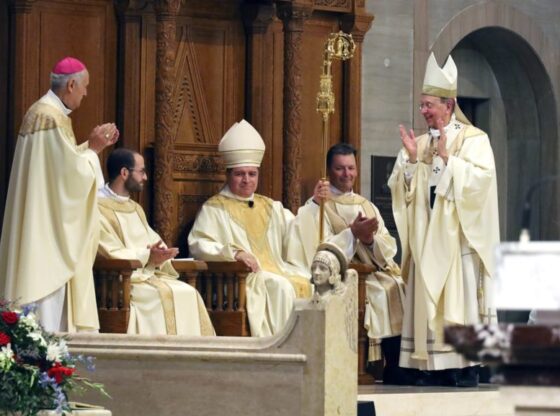

From Washing Trucks to Shepherding Souls: The Hidden Grace in an Immigrant Bishop’s Calling
The American Catholic Church has long been shaped by immigrant labor, but rarely does that story unfold as a direct parable of divine providence. The recent installation of a new bishop in West Virginia offers more than a personal narrative of upward mobility—it reveals how the Holy Spirit moves through the very structures of migration and welcome that many take for granted.
This is not a Horatio Alger tale of rags to riches, but something far more profound: a journey from washing Amazon trucks and painting houses as an undocumented worker to becoming a shepherd of Christ’s flock. The bishop’s path began not in a seminary but in a parish, where a vocation director saw something the world might have missed. “With the help of the diocese’s vocation director, he discerns a priestly vocation and goes to the seminary,” the source notes.
What makes this story spiritually significant is not the bishop’s rise, but the Church’s role as a vessel of transformation. Sent to Rome to study at the Scalabrinian Institute, he earned a degree in the pastoral care of immigrants—a preparation that would prove prophetic. Twenty-two years later, the very vocation director who helped him become a priest now retires, handing over the diocese to the man he once guided. This is not coincidence; it is the quiet architecture of grace, reminding us that God often writes straight with crooked lines.