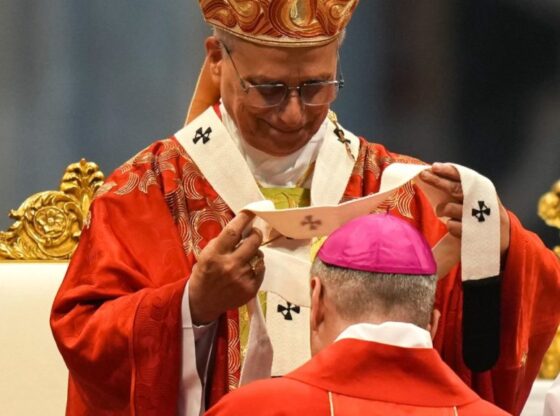

In an age of division, Pope Leo XIV’s homily on the feast of Sts. Peter and Paul offered a quiet but radical redefinition of spiritual leadership. Bestowing the pallium—a woolen band adorned with crosses—upon 35 new archbishops from 19 countries, the Pontiff reframed the symbol not as a mark of authority, but as a call to sacrificial burden-bearing. “Communion within the Church is not built by clinging rigidly to one’s own position,” he said, “but by seeking, in all hearts, points of encounter in the truth.”
The pallium, drawn from the tomb of St. Peter, has long signified an archbishop’s unity with the pope. Yet Pope Leo expanded its meaning for every Christian: “The commitment of every shepherd—and also of every Christian—to take upon their shoulders the brothers and sisters entrusted to them, like so many lambs of the Lord’s flock.” In a world where identity is often weaponized, this ancient garment whispers a forgotten wisdom: true unity is not uniformity, but the willingness to carry another’s weight. The four American archbishops—from Mobile, New York, Denver, and New Orleans—now bear this woolen yoke, reminding us that spiritual authority begins not in command, but in compassionate service.