
The Unfinished Vow: What a Mother’s Heart Sutra Teaches About Letting Go
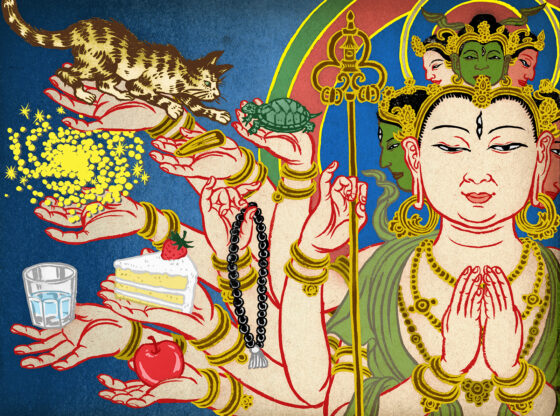
In contemporary spiritual discourse, we often treat sacred texts as static artifacts—ancient words to be deciphered, not lived. Yet the Japanese poet Hiromi Ito’s encounter with the Heart Sutra offers a radically different approach: scripture as a mirror for the messy, ongoing work of parenthood and loss. Her reflections, translated by Jeffrey Angles, reveal that the sutra’s famous assertion of emptiness is not an abstract philosophical claim but a practical tool for navigating the impermanence of family life.
Ito writes of her daughter Kanoko—a name that sometimes represents one child, sometimes all three, sometimes an amalgam. This fluid identity is itself a lesson in non-attachment. The Heart Sutra teaches that form is emptiness, and emptiness is form. For a mother watching children grow, change, and pursue unexpected paths—like Kanoko’s brief aspiration to become a nun—this teaching becomes visceral. The daughter one raised is not the daughter who exists now, and the mother who raised her is equally transformed.
What emerges is not a sentimental reading but a rigorous one: the Heart Sutra is not an escape from worldly bonds but a deeper entry into them. By seeing through fixed notions of self and other, Ito suggests, we can love more honestly, without the clinging that turns love into suffering. The vow of the bodhisattva—to liberate all beings—begins, perhaps, with liberating our own children from our expectations of who they should be.