
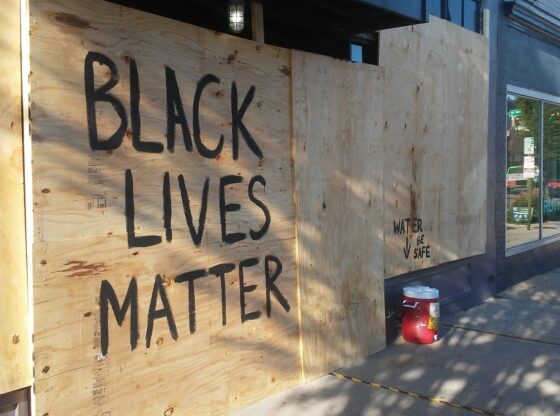

In an era where racial identity often demands unquestioning allegiance, a different voice has emerged from within the Black Christian tradition—one that prioritizes Scripture over slogans and individual conscience over collective pressure. Kevin Briggins, a Black lay pastor serving in a predominantly white Southern Baptist church, has publicly described the spiritual cost of resisting the dominant narrative surrounding race in America. His testimony, shared in a recent reflection, reveals a profound tension between worldly expectations and biblical faithfulness that has long been navigated by conservative Black believers.
Briggins recalls the expectation to “repeat the slogans, post the hashtags, and publicly align myself with a particular movement.” The pressure, he says, was clear: “stand with ‘your people.'” Yet for him, the deeper call was to stand with Christ. This is not a rejection of justice but a redefinition of it. The spiritual significance here is immense: at a time when many Christians are tempted to let political movements define their witness, conservative Black Christians offer a model of discernment. They demonstrate that one can grieve injustice without adopting a worldview that denies the image of God in every person or reduces human beings to their ethnic category.
This witness echoes ancient wisdom found throughout the Christian tradition. The Apostle Paul wrote that in Christ “there is neither Jew nor Greek” (Galatians 3:28), not to erase diversity but to relativize it before the cross. Likewise, the early church fathers like Augustine warned against letting earthly loyalties supersede the City of God. Briggins’s upbringing in Birmingham, Alabama, where his mother and grandmother taught him “forgiveness, personal responsibility, and treating people the way I wanted to be treated,” reflects this same countercultural conviction. These are not mere platitudes but spiritual disciplines that form character capable of resisting both resentment and conformity.
What conservative Black Christians quietly teach the wider church is that the gospel offers a third way between the false gods of tribalism and assimilation. They refuse to let the world’s binary of victim and oppressor define their identity. Instead, they hold together a commitment to truth-telling about sin—including systemic sin—with an equally firm commitment to personal holiness and reconciliation. This is not a comfortable position. It requires the courage to say that not every popular movement bears the Spirit’s fruit, even when that movement claims to speak for one’s own community.
For the reader seeking wisdom, the takeaway is both challenging and liberating: the Christian’s primary allegiance is to Christ, not to any racial, political, or cultural tribe. The conservative Black Christian tradition reminds us that faithfulness often means standing alone—but never apart from the communion of saints who have gone before. In a fractured age, this witness is not a political compromise but a spiritual necessity. It invites all believers to examine whether their loyalties are shaped more by the news cycle or by the unchanging Word. The soul’s stand, after all, is not about saying the right things but about belonging to the right Kingdom.