
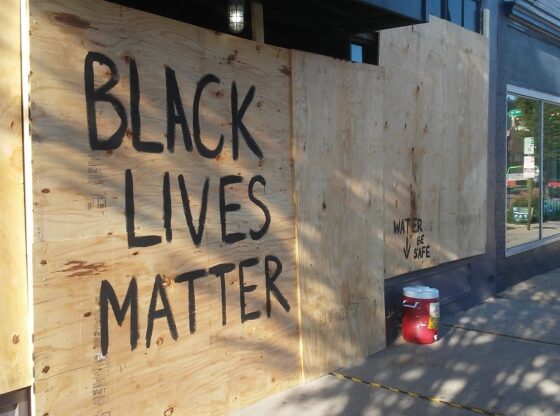

In an era when racial identity often demands a public allegiance that overshadows all other commitments, a quiet but powerful testimony has emerged from the pews of predominantly white churches. Kevin Briggins, a black lay pastor serving in a Southern Baptist congregation in Alabama, has shared his experience of resisting the pressure to conform to a narrative that pits group solidarity against biblical conviction. His story is not merely a personal account—it is a living lesson for white Evangelicals who seek to understand the depth of spiritual resilience found among conservative black Christians.
The pressure Briggins describes is immense. He recalls the expectation to repeat slogans, post hashtags, and publicly align with movements that demanded he stand with “his people.” The names Trayvon Martin, Mike Brown, Breonna Taylor, and George Floyd became rallying cries, and the emotional weight of viral videos of unarmed black men killed by police was undeniable. Yet Briggins found himself at a crossroads: embrace the dominant cultural narrative of systemic oppression and a nation fundamentally hostile to black existence, or hold fast to the biblical worldview his mother and grandmother instilled in him. He chose the latter, and in doing so, revealed a spiritual discipline that many white Evangelicals have yet to fully grasp.
This discipline is rooted in an ancient wisdom tradition that transcends modern political categories. Briggins grew up in Birmingham, Alabama, in the Deep South, raised in a Christian home where his mother and grandmother taught him the importance of forgiveness, personal responsibility, and treating others as he wished to be treated. These were not abstract ideals but practical, daily lessons that shaped his identity more deeply than any racial label could. His testimony echoes the words of the Apostle Paul, who wrote in Galatians 3:28 that in Christ, “there is neither Jew nor Greek, slave nor free, male nor female, for you are all one in Christ Jesus.” Conservative black Christians have long understood that their primary identity is not found in the color of their skin but in the redemptive work of the Cross.
What white Evangelicals can learn from this is profound: the ability to resist the gravitational pull of cultural tribalism requires a faith that is both deeply personal and fiercely biblical. It demands a willingness to be misunderstood by one’s own community, to refuse the easy path of groupthink, and to anchor one’s soul in the unchanging truths of Scripture rather than the shifting tides of public opinion. Briggins’ witness challenges the assumption that racial solidarity must override spiritual unity. Instead, it points to a higher calling: to see every person as an individual created in the image of God, not as a representative of a demographic category.
The takeaway for the reader is both simple and demanding. The next time you feel the pressure to align with a narrative based on identity alone, pause and ask: Does this align with the gospel of Jesus Christ? Does it honor the image of God in every person? Does it call me to forgiveness, personal responsibility, and love for my neighbor—even the neighbor who disagrees with me? Conservative black Christians have long navigated this tension with grace. Their quiet wisdom is a gift to the broader Church, if only we have ears to hear.